
Table of Contents
- The Quiet Shift in Luxury Thinking
- Why Natural Diamonds Feel Different: a Matter of Deep Time
- Provenance and Trust: Why Documentation Has Become Part of Luxury
- How Natural Diamonds Are Being Styled in 2026
- Understanding the Market Without Jargon
- The “Collectible Turn” and Why it Matters
- Talking About Your Diamond With Confidence
- A Final Thought: Luxury That Remembers
- Discover Natural Diamonds, Chosen with Intention
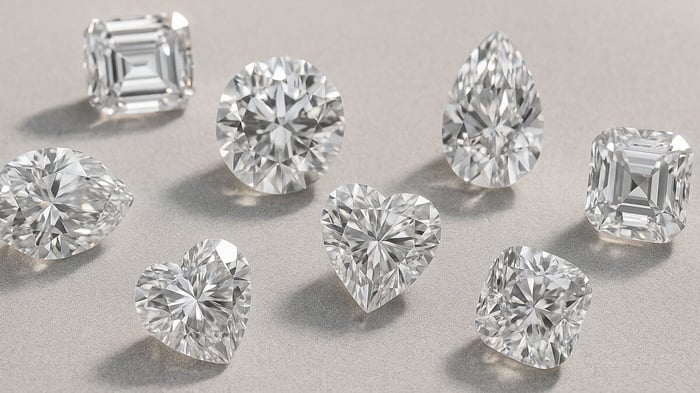
There is a moment familiar to anyone who has ever handled fine natural diamonds. The stone is placed on a pad and turned slowly beneath the light, and for a second nothing much happens. Then a flash appears, not loud, not obvious, but precise. It feels deliberate, as if the diamond is revealing itself on its own terms.
That quiet confidence explains why natural diamonds are entering 2026 with renewed relevance. In a world where almost everything can be made faster, cheaper, and in unlimited quantities, natural diamonds are being rediscovered not as default sparkle, but as meaningful luxury. They are no longer chosen simply because they are expected. They are chosen because they say something.
For many buyers, especially in the UK, their selection marks a shift. Natural diamonds are no longer about excess. They are about intention.
The Quiet Shift in Luxury Thinking
Luxury has changed. The modern buyer is less interested in impressing strangers and more interested in owning objects that feel grounded, personal, and lasting. That change has reshaped everything from watches to furniture, and diamonds are no exception.
In 2026, the jewellery market has become clearer in its structure. Everyday diamond jewellery has become more accessible and fashion-led, while natural diamonds are increasingly positioned as heirloom pieces, objects chosen for milestones, legacies, and personal meaning.
Martin Rapaport, one of the most closely followed voices in the diamond industry, describes the moment plainly:
“The lab-grown surge is real. It pressures prices, but it also forces the natural sector to sharpen its story and scarcity strategy.”
For the buyer, this clarity is helpful. It allows natural diamonds to stand for something specific. Not just beauty, but rarity, history, and emotional weight.
This is particularly resonant in the UK, where jewellery buying has long favoured understatement. A natural diamond fits comfortably into that tradition. A natural diamond does not need to be flashy to hold value.
Anillo de compromiso con solitario de diamante certificado de 1,00 ct de calidad E/VS en platino
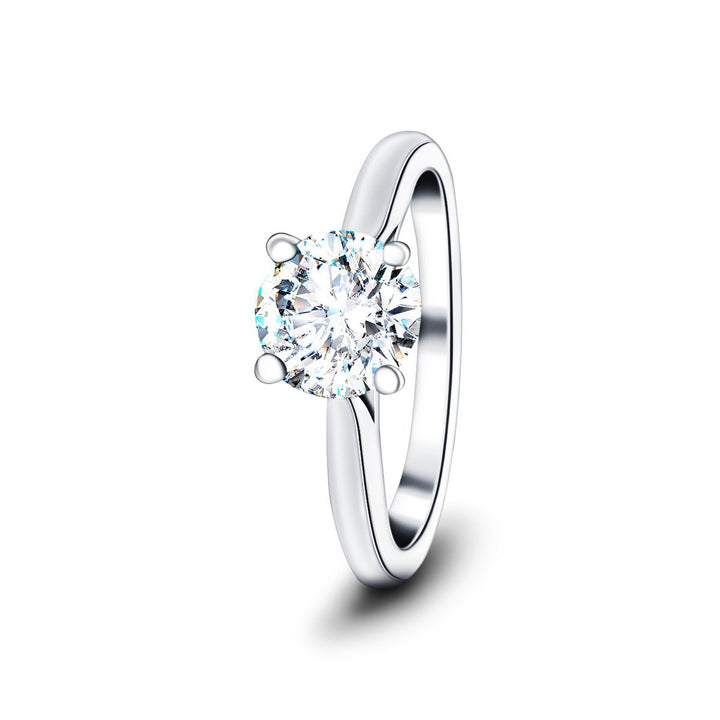
€6.049,95
Un quilate completo de diamante centelleante, hecho a mano con amoroso cuidado y engastado de forma segura en lujoso platino para producir un brillo seductor en la mano de su amada. Garantizado para toda una vida de belleza y romance,… read more
Why Natural Diamonds Feel Different: a Matter of Deep Time
One of the simplest ways to understand a natural diamond's value is to think in terms of time.
Natural diamonds formed deep within the Earth under extreme pressure and heat, typically one to three billion years ago. They are not manufactured. They are the result of a sequence of geological events that cannot be repeated on demand.
This fact alone carries weight. In an age where so much luxury is engineered, the natural diamond remains one of the few objects whose origin story is entirely outside human control.
As a gemological analyst from the GIA has noted:
“The geological timeline of natural diamonds underpins long-term rarity and collector interest.”
That timeline matters emotionally as much as scientifically. When people talk about natural diamonds, they often find themselves saying things like, “It’s older than anything else I own” or “It existed long before us.” These are not marketing phrases. These statements reflect genuine reactions to the experience of holding a natural diamond, which was formed by the planet itself.
This sense of deep time is one of the most compelling reasons people give when explaining their choice of a natural diamond to others.
Provenance and Trust: Why Documentation Has Become Part of Luxury
Luxury today is inseparable from trust. Buyers want to know not just what they are buying, but where it came from and how it arrived.
From January 2026, new EU regulations require traceability evidence for polished diamonds entering the bloc. While the UK is outside the EU, the impact is global. Supply chains do not stop at borders, and standards tend to travel.
For buyers, this is a positive development. It means provenance is no longer vague or implied. It is recorded, verifiable, and increasingly expected.
Dr Anita Sharma, a specialist in diamond traceability, explains the shift clearly:
“Traceability is no longer optional. It is a brand differentiator that converts sceptics into buyers when paired with a compelling story.”
In practice, this means a natural diamond today often comes with a grading report, clear sourcing standards, and documented handling along the way. Far from diminishing romance, this information enhances it. Knowing a stone’s journey makes it feel more real, more anchored.
For many UK buyers, this reassurance becomes one of the strongest arguments when discussing their choice with friends or colleagues. A natural diamond is not just beautiful. It is explicable.
Brazalete de tenis con diamantes en semibisel de 3,00 ct G/SI en oro blanco de 18 k
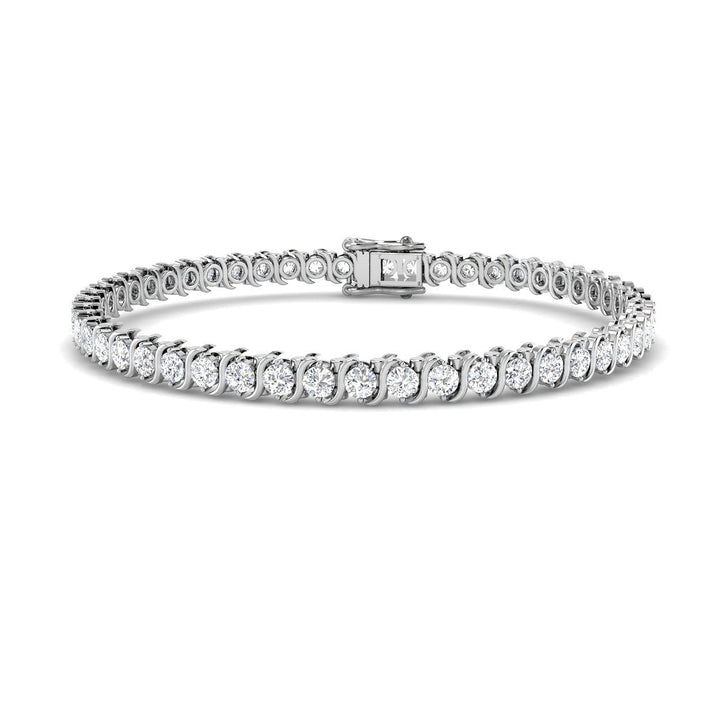
€4.396,95
Este brazalete de diamantes con semibisel fue hecho a mano con un hermoso diseño. Es una fina pieza de joyería que es perfecta para cualquier ocasión. El diseño especial le permite conectarse a la perfección con otras joyas. Una banda… read more
How Natural Diamonds Are Being Styled in 2026
The design language around natural diamonds has evolved alongside the market. The most desirable pieces in 2026 do not aim for clinical perfection. They aim for character.
This trend is visible in three clear design directions.
Vintage and antique-inspired cuts
Old mine cuts and old European cuts are gaining attention for their softer geometry and broader flashes of light. They feel less uniform and more expressive. These stones reward close viewing rather than instant impact.
Jewellery designer Sofia Laurent captures the appeal succinctly:
“A well-cut antique stone carries narrative weight that a factory-cut alternative cannot replicate.”
Warm, natural colour.
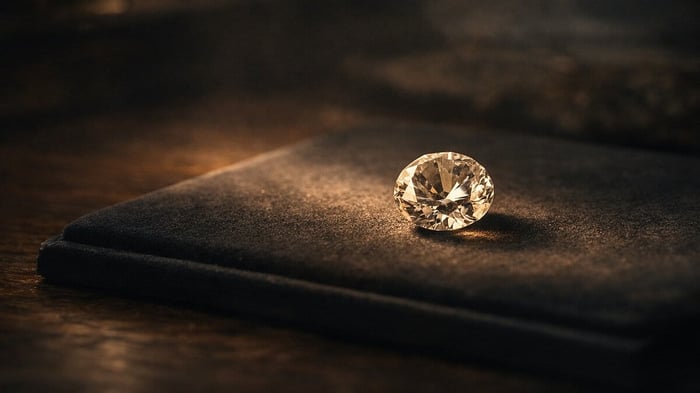
Champagne, honey, and sunlit white diamonds are increasingly sought after. Their warmth feels intentional rather than compromised, especially when paired with yellow or mixed metals. Each stone’s tone is slightly different, reinforcing the sense of individuality.
Personalised settings
Settings are no longer purely functional. East-west orientations, bezel settings, and mixed metals are used to highlight a stone’s natural character rather than disguise it. Bespoke elements turn a diamond into a personal object rather than a generic product.
Design signals at a glance
| Design direction | Why it matters in 2026 |
|---|---|
| Antique-style cuts | Emphasise individuality and heritage |
| Warm natural tones | Feel intentional and personal |
| Yellow and mixed metals | Enhance depth and warmth |
| Bezel and east-west settings | Modern, wearable, confident |
| Bespoke details | Turn rarity into ownership |
Understanding the Market Without Jargon
For buyers new to diamonds, market talk can feel intimidating. In reality, the underlying idea is simple.
Natural diamonds are becoming rarer and more carefully positioned. Everyday diamond jewellery is becoming more accessible and price-led. This separation allows each category to make sense on its own terms.
Seen through a luxury lens, the distinction looks like this:
Natural diamonds versus everyday diamond jewellery
| Aspect | Natural diamonds in 2026 | Everyday diamond jewellery |
|---|---|---|
| Origin | Geological, billions of years | Industrial production |
| Supply | Naturally finite | Scalable |
| Emotional role | Heirloom, milestone, legacy | Fashion, trend-led |
| Design focus | Character and individuality | Consistency |
| Long-term appeal | Collectible and enduring | Seasonal |
This table alone gives many buyers the language they need to articulate their choice. It reframes the decision away from price alone and towards purpose.
Aretes Halo de Diamantes 0.75ct Calidad G/SI en Oro Amarillo 18k
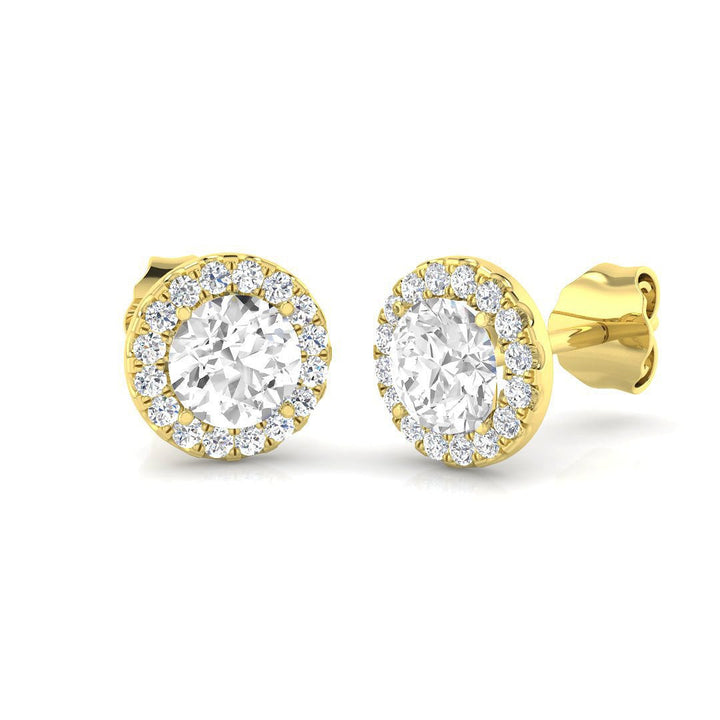
€2.136,95
Mejore su colección de joyas y complemente cualquiera de sus atuendos con estos encantadores aretes de halo de diamantes. Tres cuartos de quilate de diamantes de calidad G/SI cortados a mano están dispuestos en un halo preciso alrededor de una… read more
The “Collectible Turn” and Why it Matters
One of the most intriguing ideas emerging in 2026 is that natural diamonds may increasingly behave like collectables. There may be a decrease in impulsive purchases, a rise in thoughtful selections, and a heightened focus on documentation and narrative.
Martin Rapaport has suggested that rare natural stones may one day trade more like fine art than commodities:
“Rare natural stones will not disappear. They will become more like fine art in how they are bought and sold.”
For the buyer, this does not mean speculation. It means choosing a diamond that will still make sense emotionally years from now.
One way to visualise this shift is to look not at the raw price but at how diamonds are perceived as luxury objects.
Over the past few years, everyday diamond jewellery has faced increasing pricing pressure as similar-looking pieces become easier to produce and compare. At the same time, natural diamonds have been moving in the opposite direction, rising in perceived value as buyers place greater emphasis on rarity, provenance, and emotional meaning.
The chart below illustrates this changing mindset. It shows how volume-led diamond pricing has gradually lost its luxury pull, while natural diamonds have strengthened their position as heritage pieces chosen for longevity rather than immediacy.
The trend is not about short-term market movements but about how people increasingly define what feels genuinely valuable.
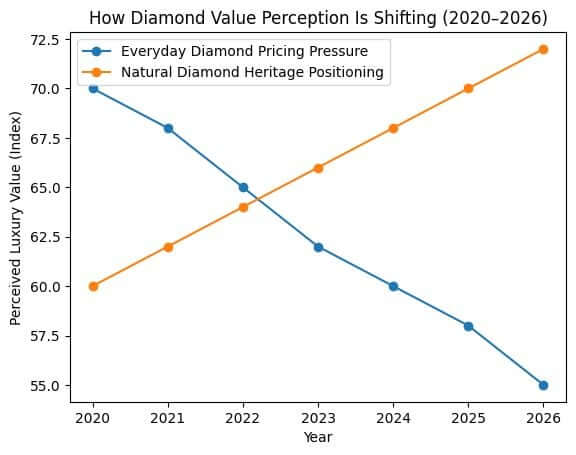 How diamond value perception is shifting from volume-led pricing to heritage-led positioning, 2020–2026.The chart shows everyday diamond pricing under pressure while natural diamonds gradually rise in perceived luxury value due to scarcity, provenance, and emotional appeal.
Talking About Your Diamond With Confidence
One of the pleasures of buying a natural diamond in 2026 is that it gives you something interesting to say. Not a sales pitch, but a story.
When people ask why you chose a natural diamond, the answers often come naturally:
“I liked that it took billions of years to form.”
“I wanted something genuinely finite.”
“It felt more like an heirloom than a trend.”
“I preferred a stone with character rather than perfection.”
“I liked knowing where it came from.”
These are not technical arguments. They are human ones. And they resonate.
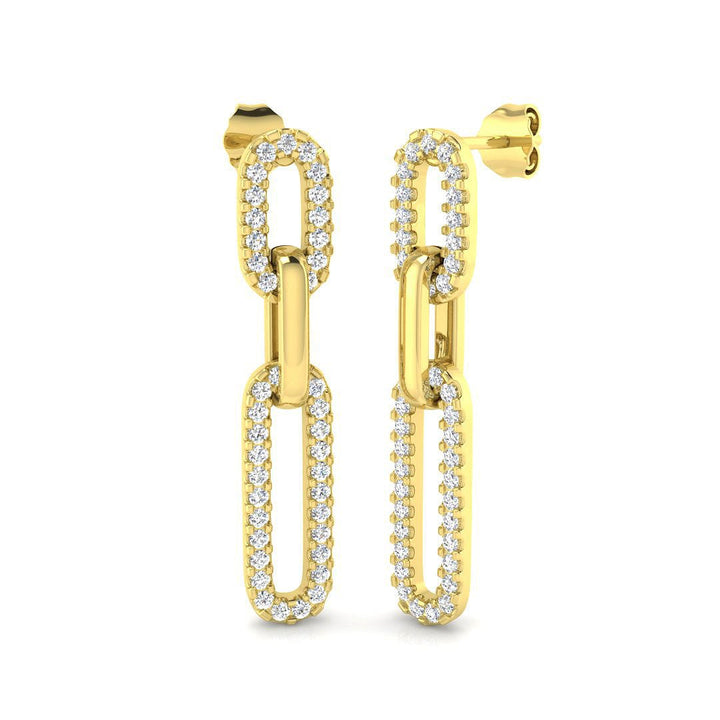
Pendientes Paperclip de Diamantes 0.80ct Calidad G/SI en Oro Amarillo 9k
€1.114,95
Agregar descripción… read more
A Final Thought: Luxury That Remembers
Imagine two diamonds in an auction room decades from now. One is lab-grown, flawless on paper, bright, and easily replaced. The other has a warm tone, a distinctive cut, and a documented history. It has been worn, celebrated, and passed on.
The bidding rises first on the second stone.
Not because buyers ignore value, but because they recognise meaning.
That is the new luxury standard. Natural diamonds are no longer simply about sparkle. They are about time, intention, and the quiet confidence of owning something that doesn't need to justify its existence.
Discover Natural Diamonds, Chosen with Intention
If this article has changed the way you think about natural diamonds, the next step is simply to look more closely.
At All Diamond, our natural diamond jewellery is selected with the same principles explored here in mind: rarity over repetition, character over uniformity, and enduring beauty over short-term trends. Each piece is designed to feel considered, not rushed. Something you choose because it resonates, not because it was expected.
Whether you are browsing for an engagement ring, a meaningful gift, or a piece to mark a personal milestone, we invite you to spend a few unhurried minutes exploring our collections. Look at the stones. Notice the warmth, the individuality, and the way the designs let each diamond speak for itself.
Luxury is rarely about impulse. It is about recognising something that feels quietly right.
Explore our natural diamond jewellery and find the piece that stays with you.