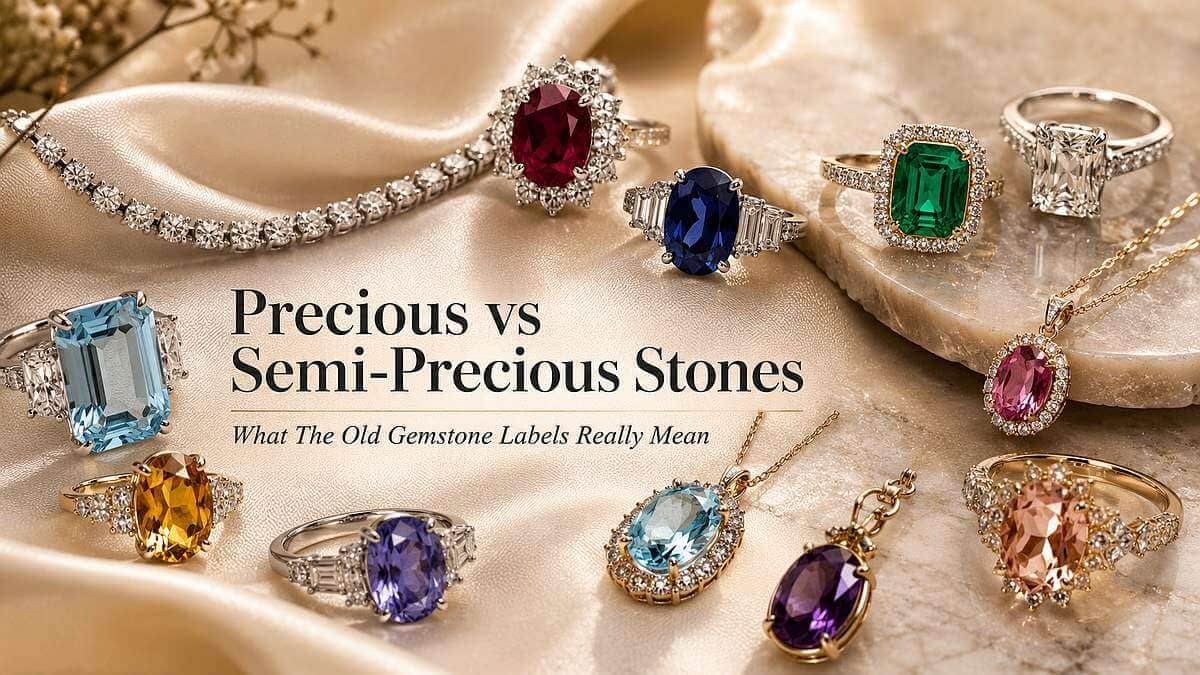

Some jewellery words carry more romance than accuracy. 'Precious' and 'semi-precious' are among them. These labels are historical, not scientific, and they do not reliably tell you which gemstone is better.
They sound beautifully simple, as if the gemstone world were divided into two velvet-lined trays: the rare, important stones on one side, the charming but lesser stones on the other. Yet the truth is more interesting. These labels are old, familiar and still widely used, but they do not tell the full story of a gemstone’s beauty, rarity, durability or value.
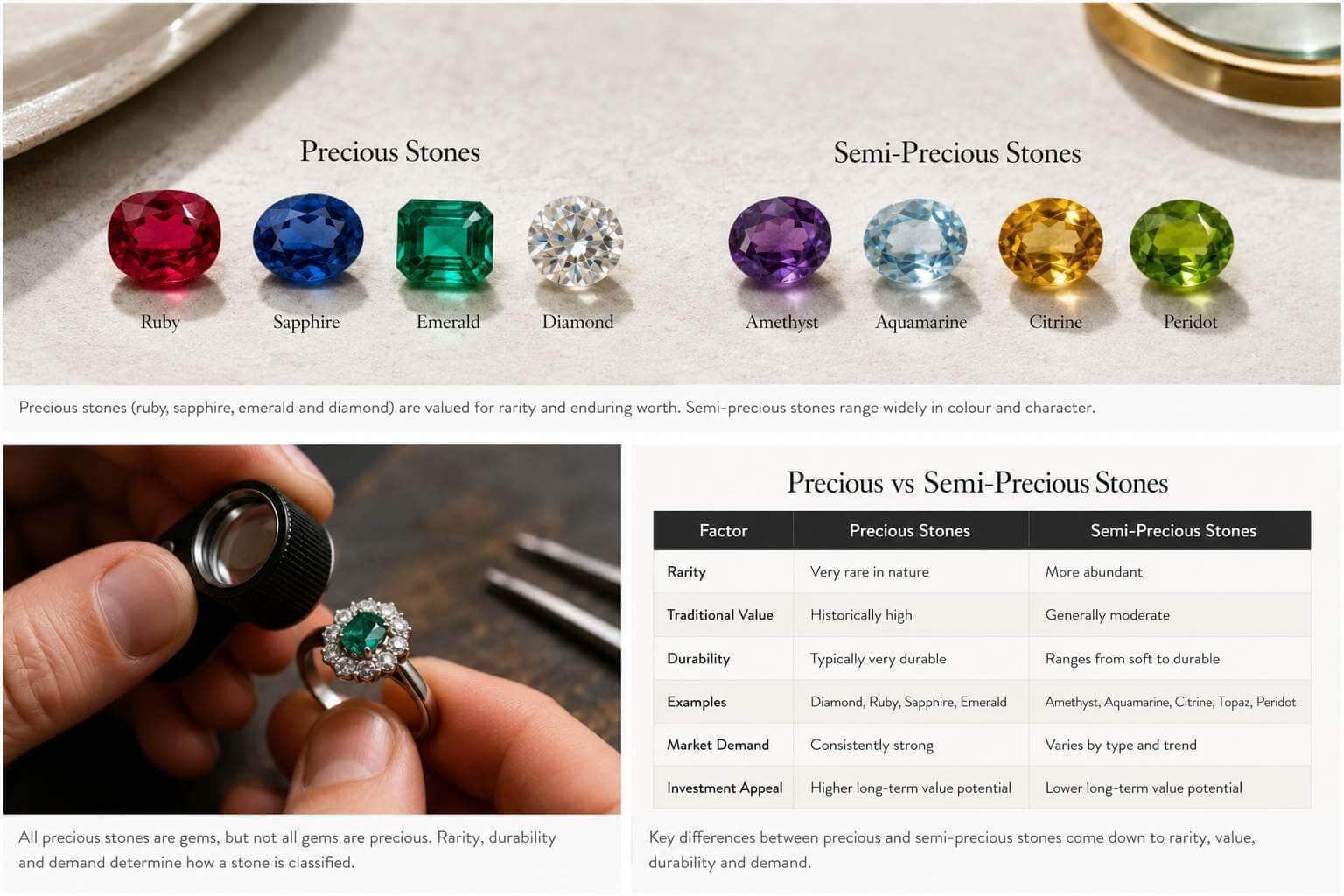
Traditionally, only four gemstones are called precious: diamond, ruby, sapphire and emerald. Everything else, from amethyst and aquamarine to tanzanite, topaz and tourmaline, falls into the semi-precious category.
That does not mean every so-called precious stone is more valuable than every so-called semi-precious one. Nor does it mean that a semi-precious gemstone is less beautiful, less rare, or less worthy of fine jewellery. In modern jewellery, these labels are best treated as historical shorthand, not as a ranking system.
Precious stones traditionally mean diamond, ruby, sapphire and emerald. Semi-precious stones include other gemstones such as amethyst, aquamarine, citrine, topaz, tanzanite, tourmaline and many more. The distinction is historical rather than scientific. When choosing fine jewellery, colour, quality, durability, rarity, setting, provenance and personal meaning matter far more than the old label.
A short companion video explaining what precious and semi-precious gemstone labels really mean and why the best choice depends on colour, durability, setting and personal style.
What Does Precious Stone Mean?
In the traditional Western jewellery vocabulary, a precious stone is one of four gemstones: diamond, ruby, sapphire or emerald.
These stones earned their elevated status through a mixture of rarity, durability, beauty, royal association and market demand. They were admired by rulers, collectors and jewellers long before modern gemology gave buyers a more precise language for understanding gemstones.
Diamond became the great symbol of brilliance and endurance. Ruby carried the intensity of deep red colour. Sapphire, especially blue sapphire, became associated with refinement, loyalty and collector taste. Emerald offered an entirely different mood, with its vivid green colour and softer, more included natural character.
The label “precious” therefore tells us something about history. It tells us these stones were long considered the great pillars of high jewellery. It does not, by itself, tell us that every diamond, ruby, sapphire or emerald is automatically more beautiful, rare or valuable than every other gemstone.
That is the important distinction.
A fine sapphire may be extraordinary. A poor-quality sapphire may be less desirable than a beautifully coloured tanzanite, aquamarine or tourmaline. A vivid natural diamond may be rare and valuable. A heavily included, poorly cut stone may not have the same visual charm or desirability.
The old label is a beginning, not a conclusion.
What Does Semi-Precious Stone Mean?
'Semi-precious stone' traditionally means any gemstone that is not a diamond, ruby, sapphire or emerald.
That is a very broad category. It includes accessible stones, collector stones, delicate stones, durable stones, rare stones, organic gems and gemstones with entirely different visual personalities.
Common examples include amethyst, aquamarine, blue topaz, citrine, garnet, morganite, opal, pearl, peridot, tanzanite, topaz, tourmaline and turquoise.
The problem is not that the term is always unusable. Many buyers still search for 'semi-precious stones', and many people understand it as a convenient phrase for coloured gemstones outside the traditional big four.
The problem is the implication. 'Semi' can sound like 'half', 'lesser' or 'nearly precious'. In fine jewellery, that can be very misleading.
Tanzanite, for example, has a rich blue-violet character that can feel deeply luxurious in the right setting. Aquamarine has a pale, crystalline calm that many people find more wearable than stronger blue stones. Tourmaline can appear in a remarkable range of tones, from soft pink to vivid green. Topaz can offer clear brilliance and striking colour. Amethyst and citrine bring expressive colour at a more accessible level.
These stones are not simply lesser versions of the traditional four. They have their own presence, mood and jewellery language.
Why The Labels Can Be Misleading
The words 'precious' and 'semi-precious' create a tidy hierarchy, but gemstones do not always behave tidily.
A gemstone’s real desirability depends on many things: colour, cut, clarity, carat weight, rarity, origin, treatment, durability, setting quality and the taste of the wearer. The old category may be familiar, but it is too blunt to carry all that information.
A 'precious' stone can be modest in quality. A 'semi-precious' stone can be rare, beautiful and highly desirable. Some coloured gemstones outside the traditional precious four can command serious attention from collectors and designers, especially when colour is exceptional.
There is also the matter of use. A gemstone that looks exquisite in earrings may not be ideal for a ring worn every day. A stone that is perfect for a pendant may need more thought if chosen for an engagement ring. Beauty is not the only question. Wearability matters too.
That is why a modern buyer should treat the old labels as cultural language rather than buying advice.
Ask instead whether the colour is beautiful to you, whether the stone is durable enough for the way the jewellery will be worn, whether the cut is flattering and lively, whether the setting suits the gemstone, whether any treatment has been disclosed clearly, and whether the piece feels elegant, personal and well judged.
Those questions are far more useful than asking whether the stone sits in the precious or semi-precious box.
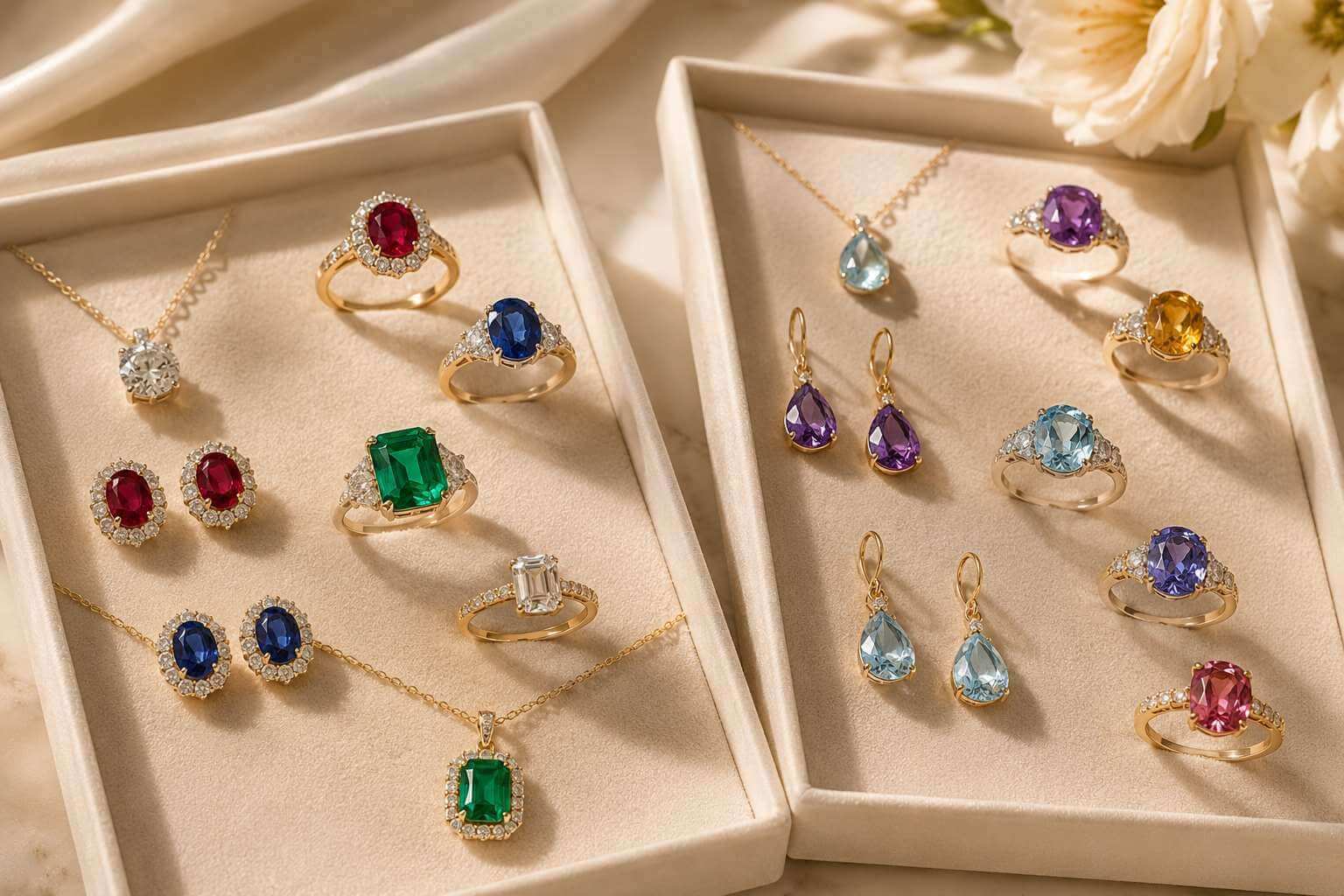
When coloured gemstones are framed by diamonds, the setting can change the whole mood of the piece. Diamond halos, shoulders and accents often make colour look more focused, refined and deliberate.
Explore Fine JewelleryThe Four Traditional Precious Stones
The four precious gemstones still deserve their reputation. They have endured because they combine beauty, symbolism and jewellery performance in unusually compelling ways.
Diamond
Diamond is the hardest gemstone, with a Mohs hardness of 10. Its appeal lies not only in rarity, but in light. A well-cut diamond gathers, bends and returns light in a way that gives it brilliance, fire and scintillation.
In fine jewellery, diamond also plays two roles. It can be the centrepiece, as in a solitaire ring or diamond pendant, but it can also act as a supporting light source around coloured gemstones. A diamond halo around sapphire, ruby, emerald, aquamarine or tanzanite can sharpen colour, increase contrast and make the whole design feel more finished.
That is why diamond remains the natural companion to so many gemstone pieces. For more on diamond appeal, see Natural Diamonds In 2026: The New Luxury Standard.
Ruby
Ruby is the red variety of corundum, the same mineral family as sapphire. Its great appeal is emotional intensity. Ruby colour can range from pinkish red to deep, saturated red, but the finest stones have a richness that feels warm, dramatic and alive.
In jewellery, ruby is often chosen for romance, confidence and statement. Set with diamonds, it becomes even more vivid, because white diamond light makes the red appear more concentrated.

Ruby & Diamond 1.20ct Halo Ring in 18k White Gold
A ruby and diamond halo ring shows why the old “precious stone” language still has emotional force. The red centre stone brings intensity, while the surrounding diamonds sharpen the colour and give the design its sense of occasion.
View DesignYou can explore the colour story further in Ruby Jewellery Renaissance.
Sapphire
Sapphire is also corundum. Blue sapphire is the classic image most people know, but sapphires occur in many colours, including pink, yellow, green, purple and colourless.
This makes sapphire one of the most versatile of the traditional precious stones. Blue sapphire can feel calm and aristocratic. Pink sapphire can feel feminine and contemporary. Yellow sapphire can feel bright and optimistic. In the right design, sapphire can be traditional or strikingly modern.

Blue Sapphire & Diamond 1.30ct Halo Ring in 18k White Gold
Blue sapphire offers a different kind of precious-stone beauty from ruby. In a diamond halo setting, the colour feels cooler, more composed and classically refined, showing how the same design language can create a completely different mood.
Explore StyleFor a deeper look at this gemstone, see Sapphires For The Modern Collector.
Emerald
Emerald is the green variety of beryl. It is loved for colour rather than perfection. Unlike diamond, where clarity is often prized with particular intensity, emeralds are frequently accepted with visible inclusions. These internal features are sometimes poetically described as the stone’s garden.
Emerald has a softer character than diamond, ruby or sapphire. It needs more care, especially in rings, but its colour has a quiet authority that few stones can match. Emerald jewellery often feels refined, intelligent and understated.
For more on emerald style, see Emeralds And Quiet Luxury.
Examples Of Semi-Precious Stones
The semi-precious category is so large that it is best understood through examples rather than as one single family.
Aquamarine
Aquamarine has a pale blue to blue-green tone, often with a watery clarity that makes it feel fresh and composed. It is part of the beryl family, like emerald, but usually has a cleaner, calmer visual character.
It works beautifully with diamonds because the contrast is soft rather than dramatic. Diamond accents around aquamarine can make the blue feel cooler, cleaner and more luminous. You can read more in All About Aquamarine.
Amethyst
Amethyst is the purple variety of quartz. Its appeal lies in colour range: soft violet, regal purple, deep grape and more delicate lavender tones. It is accessible compared with many traditional precious stones, but that does not make it visually unimportant.
Amethyst can look especially elegant when used with white diamonds or white precious metals, where the purple becomes crisp and defined.
Citrine
Citrine brings golden yellow to orange tones. In jewellery, it has a warm, sunlit quality that can feel relaxed, optimistic and slightly vintage, depending on the setting.
It is often more accessible than yellow sapphire or yellow diamond, but it offers a very different mood. Citrine is not trying to imitate yellow diamond. It has its own honeyed warmth.
Blue Topaz
Blue topaz is popular for its clarity and colour range, from pale sky blue through to darker London blue. It can be highly wearable in earrings and pendants, and it gives designers a way to introduce a striking blue gemstone look without the visual weight of sapphire.
London blue topaz, in particular, has a deeper, moodier character. It can feel almost architectural when paired with clean diamond accents.
Tanzanite
Tanzanite is known for its blue to violet-blue colour, often with a depth that shifts under different lighting. It has a more delicate nature than sapphire, so it suits pieces where wear can be managed thoughtfully.
In the right jewellery, tanzanite feels highly distinctive. It is a good example of why the term 'semi-precious' can be too dismissive. Its colour can be exceptionally sophisticated.

Halo Oval Tanzanite 1.85ct and Diamond 0.41ct Ring in 18K White Gold
Tanzanite is a useful reminder that “semi-precious” can be a clumsy label. In a diamond halo ring, its blue-violet colour feels rich, individual and unmistakably refined rather than secondary.
Discover MoreFor more on this stone’s distinctive appeal, see Blue Tanzanite: The Beautiful Rare Gemstone.
Morganite
Morganite, another beryl gemstone, is loved for soft pink, peach and blush tones. It has a romantic gentleness that looks particularly graceful with rose gold, white gold or diamond accents.
It is not as hard as diamond or sapphire, but it can be a beautiful choice for jewellery worn with appropriate care.
Tourmaline
Tourmaline is wonderfully varied. Pink tourmaline, green tourmaline and other colour varieties give designers a broad palette. Its appeal is often expressive rather than formal.
Pink tourmaline can be pretty, lively and feminine, especially when diamonds are used to lift the colour.
How To Judge A Gemstone Properly
A more modern way to compare gemstones is to look at the qualities that actually affect beauty, wearability and value.
Colour
Colour is central for coloured gemstones. With diamonds, cut often dominates the conversation. With coloured stones, colour can be the first emotional pull.
The best colour is not always the darkest colour. A stone may be too dark to show life or too pale to feel distinctive. The right colour is vivid, attractive and suited to the design.
A soft aquamarine may be perfect in an elegant pendant. A vivid ruby may be ideal for a statement ring. A gentle morganite may suit someone who wants romance without intensity. A sapphire may appeal to someone who wants colour with classic structure.
For a broader colour-led view, see Fine Jewellery Colour Trends In 2026.
Cut
Cut is not only about shape. It is about how well the gemstone has been fashioned to reveal colour, sparkle and proportion.
A well-cut stone feels alive. A poorly cut stone may appear flat, dark or awkward, even if the material itself is desirable.
Different gemstones also respond differently to cutting. Diamond cutting is deeply tied to brilliance. Coloured gemstone cutting often balances colour depth, size retention and light return. For more on shape and personality, see Gemstone Shapes And Your Personality.
Clarity
Clarity expectations vary by gemstone.
A diamond with high clarity may be prized for its clean appearance. Emerald, by contrast, is often accepted with inclusions because inclusions are part of its natural character. Some coloured gemstones are expected to be relatively clean. Others are appreciated despite visible internal features.
The question is not simply, "Is it flawless?” The better question is whether the clarity affects beauty, durability or value in a way that matters for the piece.
Carat Weight And Scale
Carat weight affects presence, but each gemstone carries size differently. A one-carat diamond, a one-carat sapphire and a one-carat emerald may not look identical in face-up size because gemstones vary in density and cutting style.
For jewellery, visual proportion often matters more than the number alone. A gemstone should suit the setting, the hand, the neckline, the ear, and the style of the wearer.
Durability
Durability is particularly important for rings. Earrings and pendants are usually more protected, but rings meet everyday life more directly.
Diamond is the hardest gemstone, rated 10 on the Mohs scale. Ruby and sapphire are also highly durable, rated 9. Emerald, aquamarine and morganite are softer, around 7.5 to 8, and need more thoughtful care. Topaz is around 8, while amethyst and citrine, as quartz varieties, sit around 7. Tanzanite is softer again and benefits from more careful wear.
Hardness is not the whole durability story. Toughness, cleavage, inclusions, treatments and setting style also matter. A protective setting can make a meaningful difference.
Treatment And Disclosure
Many gemstones are treated to improve colour or clarity. Heat treatment in sapphire and ruby is common. Emeralds are often treated with oils or resins to improve apparent clarity. Blue topaz is commonly treated to produce its blue shades.
Treatment is not automatically a problem. The important thing is disclosure. A buyer should know what the stone is, whether it has been treated, and whether that treatment affects care or value.
Clear information is part of good jewellery buying.
Which Stones Work Best For Jewellery?
There is no single best stone. There is only the right stone for the design, the occasion and the wearer.
For everyday rings, diamond, sapphire and ruby are strong choices because of their hardness and durability. Emerald can be beautiful in rings, but it needs a more careful wearer and a sympathetic setting. Aquamarine, morganite and topaz can also work, especially when set thoughtfully, though they are not as hard as diamond or sapphire.
For earrings and pendants, the choice broadens. Stones that might need more care in a daily ring can be excellent in pieces that face less abrasion. Tanzanite, amethyst, citrine, topaz, tourmaline and aquamarine can all bring beautiful colour to jewellery worn with reasonable care.
This is where the old precious and semi-precious labels become least helpful. A gemstone does not need to belong to the traditional precious four to make elegant jewellery. It needs to be chosen honestly, set well and matched to the life it will live.
Choosing With Confidence
The most useful way to approach precious and semi-precious stones is not to discard the old language completely, but to keep it in its place.
Precious stones are the traditional big four: diamond, ruby, sapphire and emerald. They have earned their status through beauty, history and lasting demand.
Semi-precious stones include a much wider world of colour and character. Some are accessible, some are rare, some are delicate, some are highly wearable, and many are capable of extraordinary beauty.
A thoughtful jewellery buyer does not need to be trapped by the label. The better approach is to ask what the stone brings to the piece.
Does it have the right colour? Does it suit the design? Is it durable enough? Is it properly disclosed? Does it feel like something you will want to wear, keep and return to?
In the end, a gemstone’s worth is not found in a category name alone. It is found in the meeting of beauty, craftsmanship, meaning and trust.
The most beautiful gemstone jewellery is rarely about labels alone. It is about colour, proportion, setting and the way diamonds bring light to the design.
Explore All Diamond’s natural diamond and gemstone jewellery to discover pieces where coloured gemstones are framed with refinement, balance and lasting style.
Explore Fine JewelleryPrecious vs Semi-Precious Stones: FAQs
What Are The Four Precious Stones?
The four traditional precious stones are diamond, ruby, sapphire and emerald. This is a historic jewellery classification rather than a scientific ranking of all gemstone value.
What Does Semi-Precious Stone Mean?
Semi-precious stone traditionally means any gemstone outside diamond, ruby, sapphire and emerald. Examples include amethyst, aquamarine, citrine, topaz, tanzanite, tourmaline and many others.
Are Semi-Precious Stones Less Valuable?
Not always. The term can be misleading because some so-called semi-precious gemstones can be rare, beautiful and highly desirable. Value depends on colour, quality, rarity, durability, treatment and demand.
Which Gemstones Are Best For Everyday Rings?
Diamond, sapphire and ruby are among the strongest choices for everyday rings because they are very hard and durable. Emerald, aquamarine, morganite, topaz and other stones can also work, but they may need more care and suitable settings.
Is Emerald More Delicate Than Diamond?
Yes. Emerald is softer than diamond and often has natural inclusions, so it needs more thoughtful care. It can still be exquisite in fine jewellery, especially when set and worn appropriately.
Should I Avoid The Term Semi-Precious?
You do not need to avoid it completely, because many buyers still use the phrase. However, it is best understood as an old category, not as a judgement of beauty or quality.