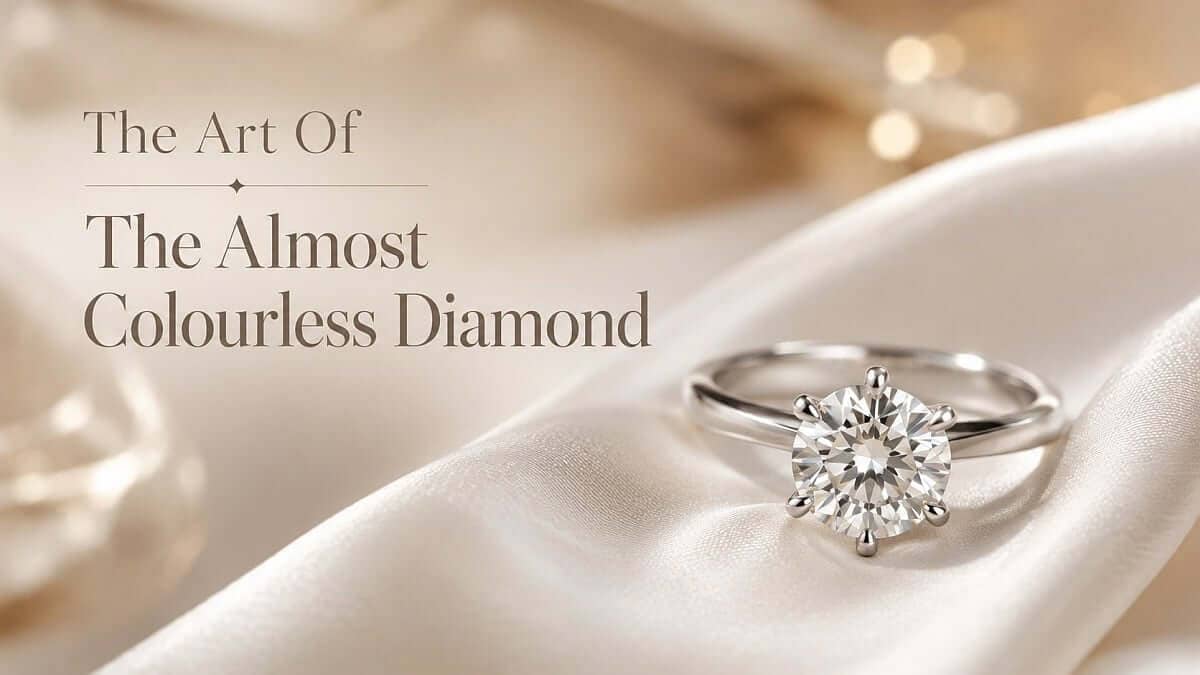

There is a particular glamour to the idea of a completely colourless diamond. It sounds pure, absolute, almost untouchable. A D-colour diamond sits at the very top of the grading scale; it's cool, immaculate, and the kind of diamond that feels destined for velvet trays and hushed admiration.
Yet jewellery is not lived on a certificate.
A diamond is worn against skin, moves with breath and catches light in everyday moments. In that real-life light, the question gently shifts. It is no longer only “Which diamond is highest on the scale?” It becomes something more human: “Which diamond actually looks most beautiful when worn?”
That is where the almost colourless diamond, particularly a well-chosen G colour diamond, becomes quietly compelling.
Not lesser. Not apologetic. Not the sensible cousin of a more glamorous stone. Almost colourless diamonds, especially beautifully selected G colour diamonds, occupy a refined middle ground between technical prestige and visible pleasure. They are bright enough to feel crisp, elegant enough to sit beautifully in fine jewellery, and intelligent enough to leave room for scale, design and presence.
There is art in that. There is also confidence.
A short guide to why an almost colourless G/SI diamond can be a beautifully judged choice in natural diamond jewellery.
Table Of Contents
- The Allure Of The Colourless Diamond
- What Almost Colourless Really Means
- Why G Colour Works So Beautifully In Jewellery
- The Beauty Of Not Paying For What The Eye Cannot See
- SI Clarity And The Poetry Of The Visible
- When Warmth Starts To Have A Voice
- When A Higher Colour Grade Still Makes Sense
- Why Almost Colourless Can Feel More Luxurious
- Choosing With The Eye, The Hand And The Heart
- Explore Almost Colourless Natural Diamond Jewellery
- Frequently Asked Questions
The Allure Of The Colourless Diamond
The colourless diamond appeals to the part of us that loves purity. It suggests winter light, clear water, white silk and moonlit metal. In grading language, colourless usually refers to the highest part of the diamond colour scale: D, E and F.
D sits at the very top. For some buyers that matters deeply. There are people who love the idea of the purest possible stone, and certain designs where a very high colour grade can be part of the pleasure: a large centre stone, a minimalist solitaire, a step-cut diamond with broad open facets, or a piece chosen as much for its specification as for its sparkle.
But the romance of the colourless diamond can become a little too obedient to paper. Jewellery asks how the diamond looks when it is set. It asks how the metal frames it, how the shape handles light, how the stone relates to skin tone, and whether the piece feels beautiful when worn rather than merely impressive when described.
A colourless diamond may be the technical ideal. An almost colourless diamond may be the more artful choice.
What Almost Colourless Really Means
Almost colourless is not a phrase of defeat. It is a phrase of nuance.
A G colour diamond sits just below the colourless grades, at the top of the near colourless range. To most eyes, especially once the diamond is set in jewellery, it appears bright, clean and white. The faint warmth that separates it from the very highest grades is often too subtle to command attention in normal wear.
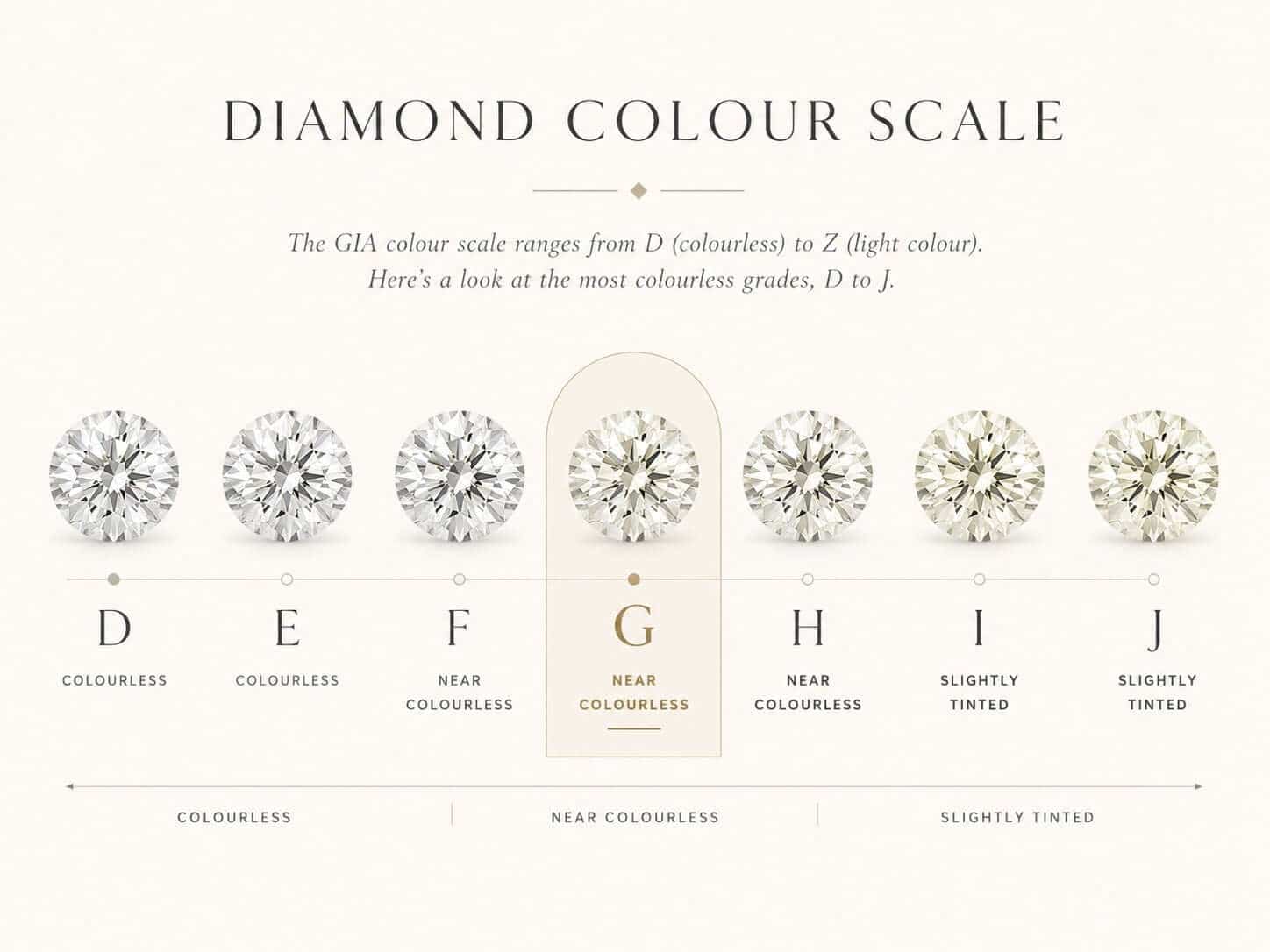
This is the important distinction. You are not choosing a diamond that looks yellow. You are choosing a diamond that gives a refined white impression without asking you to pay heavily for a level of absence most people will never consciously see.
That is why G colour can feel so beautifully judged. It is not trying to win the laboratory. It is trying to look right on the hand, at the ear, at the throat.
There is a quiet sophistication in choosing what the eye can appreciate. Taste is not always the pursuit of the maximum. Often, it is the ability to stop at exactly the right point.
For a broader grounding in diamond grading language, All Diamond’s guide to what GIA grades mean for sparkle is a useful companion.

Design Example
Certified Diamond Pear Solitaire Engagement Ring 1.00ct G/SI Platinum
A pear solitaire gives the eye a clear view of the centre diamond, making it a graceful example of how G/SI quality can feel crisp, bright and refined in a finished ring.
Why G Colour Works So Beautifully In Jewellery
A diamond is rarely viewed as a loose stone against a white grading background. It is viewed in a setting, from above, in changing light. That matters.
White gold and platinum can sharpen the impression of brightness, giving a G colour diamond a cool, refined frame. Yellow gold and rose gold do something different. They bring warmth to the whole composition, which can make tiny differences in diamond colour feel less important because the design is already speaking in warmer tones.
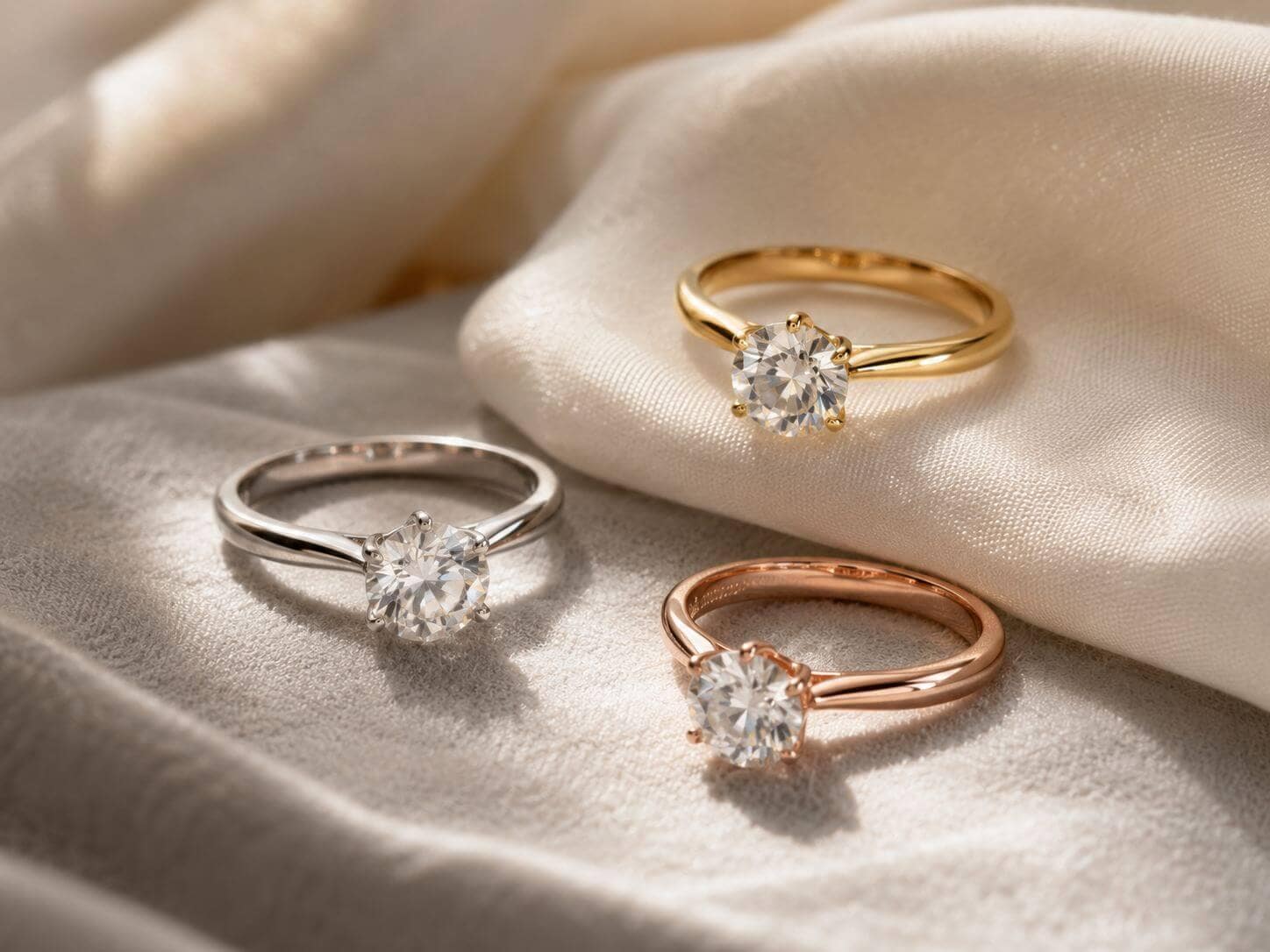
This is why an almost colourless diamond can feel so composed. It gives the jewellery designer room to work. It can sit in white metal and look fresh. It can sit in yellow gold and look harmonious. It can appear in a halo, a cluster, a five-stone ring, a pendant or a pair of earrings without demanding that the entire design revolve around its grading status.
The eye reads the finished piece first. It notices proportion, light, shape, metal and mood. Only later, if at all, does it ask whether the diamond was technically D, E, F or G.
Choosing A Natural Diamond By Sight And Feeling
Almost colourless diamonds are often at their most persuasive once they are part of a complete piece: shaped by metal, proportion, setting and light.
The Beauty Of Not Paying For What The Eye Cannot See
There is a certain liberation in realising that not every improvement on a grading report becomes an improvement in lived beauty.
A higher colour grade can be desirable. It can also be invisible to most people once the diamond is set, especially in smaller stones, brilliant cuts, diamond-set shoulders, cluster designs and pieces designed for light and movement. The higher grade may exist. It may even be technically meaningful. But if the eye cannot enjoy it, the emotion of ownership changes.
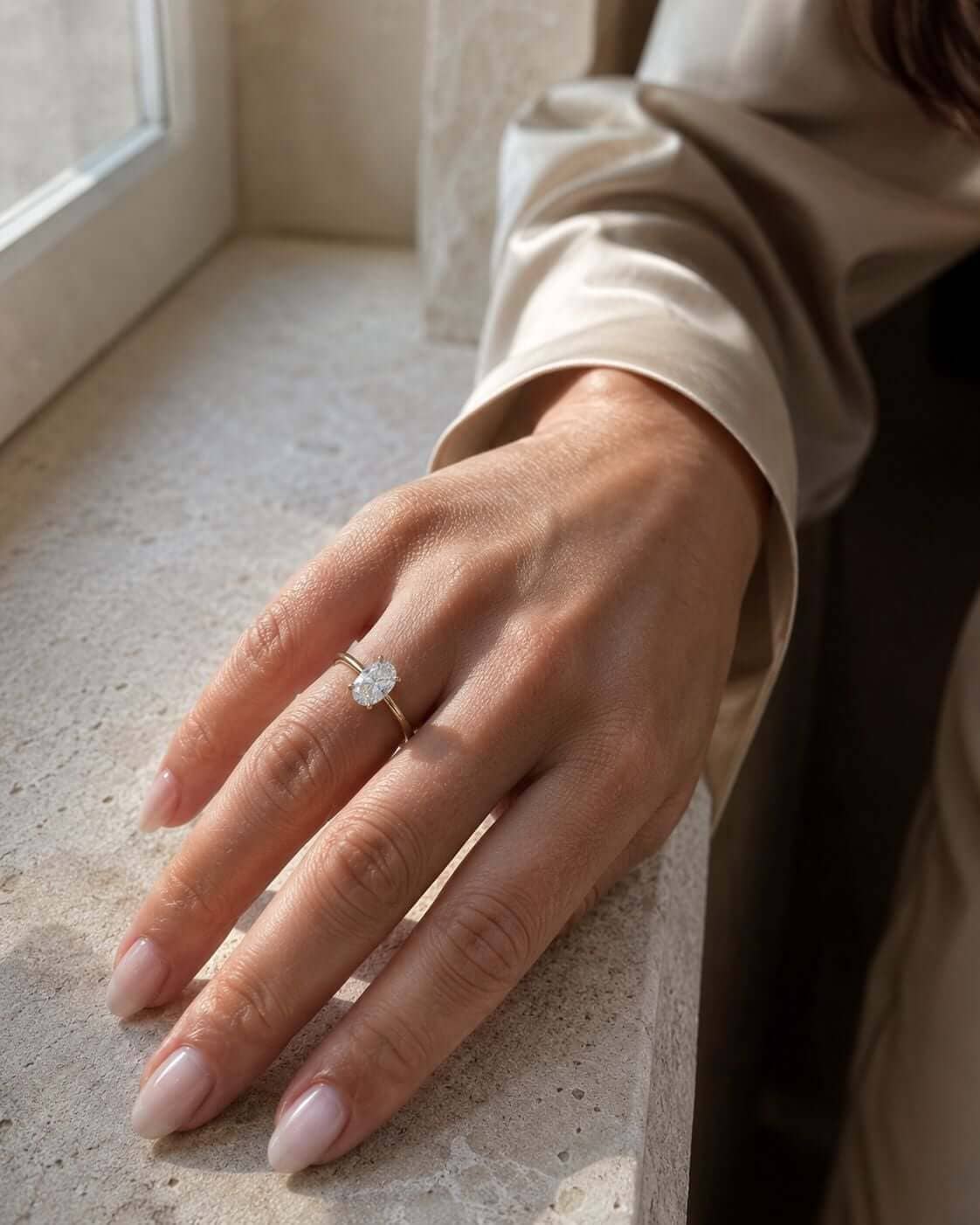
This is not a bargain argument. It is an aesthetic one.
Choosing an almost colourless diamond can allow the buyer to put more of the budget into what is visibly felt: a more graceful setting, a larger centre stone, a more substantial pair of earrings, a broader diamond line, or a piece with more presence. That can be the more luxurious result, not because it costs less, but because more of the spend is translated into beauty the wearer can actually experience.

Why This Works
Five Stone Diamond Ring with 1.50ct G/SI Quality in Platinum
A five-stone design shows how almost colourless diamonds can create generous visible presence, allowing the beauty of the piece to come from light, proportion and rhythm.
SI Clarity And The Poetry Of The Visible
The same principle applies to clarity.
SI clarity can sound less romantic than VS or VVS if one is reading only the initials. But diamonds are graded under magnification, and jewellery is loved without a jeweller’s loupe. The real question is whether the diamond is pleasing to the naked eye, whether its sparkle is lively, whether any inclusions interfere with beauty, and whether the piece has been selected with care.
A well-chosen SI diamond is not a damaged poem. It is a natural diamond with internal character that may be invisible, or close to invisible, in ordinary wear. The inclusions are part of the stone’s private architecture, not necessarily part of the wearer’s visual experience.
This is where trust matters. SI is not a magic label. Some SI diamonds are more attractive than others. Cut, positioning of inclusions, stone size and setting all matter. A thoughtful jeweller does not simply buy a grade. They select diamonds that work beautifully in the intended piece.
When Warmth Starts To Have A Voice
Lower colour grade diamonds can be beautiful. It would be wrong to pretend otherwise.
Warmth can suit yellow gold. It can feel antique, candlelit, mellow and romantic. In certain vintage-inspired designs, a softer colour can appear intentional, even poetic. There are buyers who prefer that mood, just as some prefer old-cut diamonds for their gentler, less clinical light.
But warmth is not always poetry.
Sometimes a lower colour grade begins to speak before the design has had a chance to. The diamond may look creamier, softer or more tinted than the buyer expected, especially in white metal or in larger stones. Metal choice can help. A skilful setting can flatter. But there is a difference between choosing warmth as part of the design and accepting visible colour because the diamond has been cut to a different commercial point.
This is where G colour earns its place. It remains close enough to the colourless diamond ideal to feel clean and refined, while avoiding the point where warmth becomes the first thing the eye notices.
When A Higher Colour Grade Still Makes Sense
A good article about almost colourless diamonds should not pretend that higher grades never matter.
They do.
If you are choosing a large centre diamond, the difference between colour grades can become more visible. If you are drawn to emerald cuts, Asscher cuts or other step-cut diamonds, the broad facets may reveal body colour more clearly than a brilliant cut. If the setting is extremely minimal, with little metal or surrounding sparkle to influence the impression, a higher colour grade may provide extra reassurance.
Some buyers also simply love the idea of E or D colour. That is allowed. Jewellery is emotional as well as visual. If the knowledge of owning a higher-grade colourless diamond brings pleasure every time the piece is worn, then the certificate has become part of the romance.
The point is not to dismiss the colourless diamond. The point is to understand what kind of pleasure you are buying.

Higher Grade Comparison
Asscher Cut Diamond Side Stone Engagement Ring 1.00ct E/VS in Platinum
Step-cut diamonds such as Asscher cuts can make colour and clarity choices feel more visible, which is why a higher E/VS pairing can be appealing in this style.
Why Almost Colourless Can Feel More Luxurious
Luxury is often mistaken for extremity. The highest grade. The largest stone. The most expensive choice. But true luxury, especially in jewellery, is often more composed than that.
It is proportion. It is the right scale. It is the way a ring looks as the hand moves. It is the confidence of a pendant that catches light without shouting. It is the small daily pleasure of a piece that looks more beautiful because its elements are in balance.
An almost colourless diamond can support that balance with unusual grace. It offers brightness without theatrical perfection. It feels refined without becoming cold. It allows the buyer to choose beauty as it will be seen, not merely as it will be certified.
This is particularly important in natural diamond jewellery, where the story is not only technical. Natural diamonds carry a sense of time and origin. They have travelled through the earth long before they reach the hand. To choose one well is not to demand flawlessness in every microscopic respect. It is to recognise where nature, craft and the human eye meet most beautifully.
For more on the broader appeal of natural diamonds, read All Diamond’s feature on natural diamonds in 2026.

A Style Worth Considering
Diamond Halo Marquise Pendant Necklace 0.35ct G/SI in 9k Yellow Gold
In a pendant, almost colourless diamonds are experienced through movement, light and closeness to the skin, making the finished mood more important than specification theatre.
Choosing With The Eye, The Hand And The Heart
The most beautiful diamond choice is not always the most severe one. It is not always the top of the scale, nor the lowest grade one can technically justify. It is the point where the diamond feels bright, the design feels complete, and the buyer feels quietly certain.
That is the art of the almost colourless diamond.
It gives permission to step away from the anxious pursuit of the “best” and move toward something more refined: the best-seen, best-felt, best-worn choice. A G/SI diamond can be that choice. It can look white, elegant and full of life. It can allow for presence, scale and design. It can make the wearer feel not that they compromised, but that they understood.
A colourless diamond may remain the dream for some. There is beauty in that. But almost colourless diamonds have their own language: one of balance, intelligence and visual grace.
And in jewellery, that language often speaks more beautifully than perfection.
Explore Almost Colourless Natural Diamond Jewellery
If you are choosing a diamond ring, pendant, bracelet or pair of earrings, look for the point where the grade supports the beauty of the piece rather than overwhelming the decision. At All Diamond, natural diamond jewellery is selected to feel elegant, reassuring and beautifully wearable, with diamond quality chosen for how it contributes to the finished design.
Explore natural diamond jewellery with the eye first, then let the details confirm what the light has already told you.
Find The Diamond That Looks Beautiful When Worn
Browse natural diamond jewellery chosen for refinement, presence and the kind of beauty that lives beyond the grading report.
Frequently Asked Questions
Is A G Colour Diamond A Colourless Diamond?
Strictly, G colour sits just below the colourless range and is usually described as near colourless. In real jewellery, however, a well-selected G colour diamond can look bright, white and refined to most eyes.
Is G/SI A Good Diamond Grade?
G/SI can be a beautifully judged grade when the diamond is well selected. G colour offers a near colourless appearance, while SI clarity can be visually attractive if inclusions are not obvious to the naked eye.
Should I Choose D Colour Or G Colour?
Choose D colour if owning the highest colour grade matters to you or if the design makes colour especially visible. Choose G colour if you want refined visible beauty while leaving more room for size, setting or overall design presence.
Can Lower Colour Diamonds Still Look Beautiful?
Yes. Lower colour diamonds can look lovely in the right setting, especially where warmth is intentional. The important point is to know whether that warmth is part of the desired aesthetic or simply a visible compromise.
Does Diamond Colour Matter More In White Gold Or Yellow Gold?
Diamond colour can be more noticeable in white gold or platinum because the metal creates a cooler frame. Yellow gold and rose gold can soften the impression of warmth and make subtle colour differences less obvious.