
Some jewellery colours enter the imagination before we even understand why.
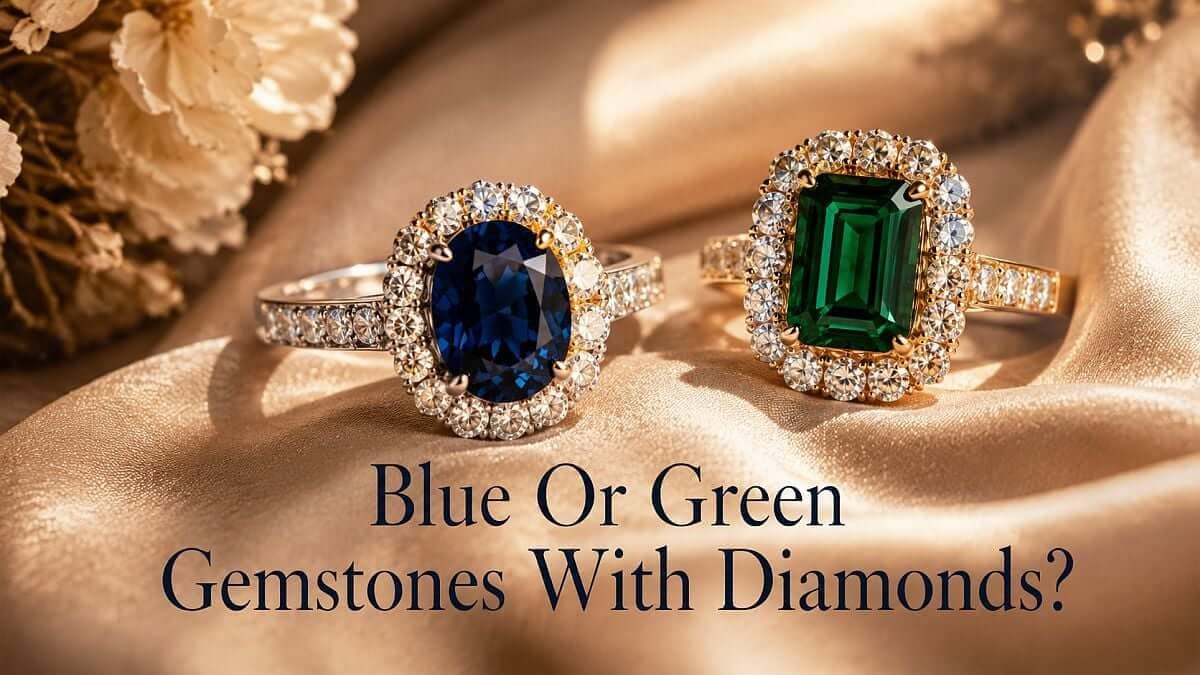
A blue sapphire circled by diamonds has carried a certain royal authority ever since Lady Diana’s famous oval sapphire engagement ring became part of modern jewellery memory. Green tells a different story. Think less ceremony, more atmosphere: emerald gardens, velvet evening light, the quiet drama of a stone that seems to glow from within.
That is the power of colour in diamond jewellery.
A diamond brings the light, but a gemstone decides the mood. Blue gives diamonds a cooler register: composed, regal, sea-lit and quietly commanding. Green works differently. It draws the eye inward, into something leafier, richer, more organic and often more vintage in feeling.
So which mood speaks to you more: the crisp polish of blue, or the lush depth of green?
Both colours can be magnificent with diamonds. Both can feel refined. Both can sit beautifully in white gold, yellow gold, rose gold or platinum. Yet they do not say the same thing. The wider high jewellery conversation has placed exceptional gemstones firmly at the centre of desirability, while current fine jewellery trend coverage continues to point towards colour, individuality and pieces with emotional presence.
At All Diamond, that conversation moves through blue sapphire, aquamarine, tanzanite, sky blue topaz, London blue topaz, blue diamond jewellery, emerald and green sapphire. Some are famous. Some are quieter. All of them show how differently diamonds behave once colour enters the setting.
A short visual guide to how blue and green gemstones change the mood, contrast and styling of diamond jewellery.
Table Of Contents
- At A Glance: Blue Versus Green Gemstones With Diamonds
- The Blue Gemstone Mood
- The Green Gemstone Mood
- Metal Colour Changes The Whole Conversation
- Sparkle, Cut And The Way Colour Holds Light
- Blue Or Green: Which Looks More Luxurious?
- How To Choose Between Blue And Green Gemstone Jewellery
- The Final Word
- Explore Colour With Natural Diamonds
- FAQ
At A Glance: Blue Versus Green Gemstones With Diamonds
Blue gemstones tend to make diamond jewellery feel cool, elegant and composed. They work beautifully with white metals, where the look becomes crisp and polished, but yellow gold can create a bolder nautical contrast.
Green gemstones tend to make diamond jewellery feel warmer, richer and more organic. Emerald brings historic glamour and a softer, velvety depth, while green sapphire gives the same colour family a more unexpected and modern character.
In simple terms:
- Blue with diamonds feels sleek, regal, bright and architectural.
- Green with diamonds feels lush, romantic, earthy and visually prominent.
Neither is better. The better choice is the one that matches the atmosphere you want your jewellery to carry.
If you opened your jewellery box tomorrow, which colour would feel more like you: the calm authority of blue, or the warmer pull of green?
Find Your Colour Direction
If you already know you are drawn to colour, start by looking at how gemstones behave beside diamonds in real designs. Shape, metal and setting will quickly reveal whether blue or green feels more naturally yours.
The Blue Gemstone Mood: Cool Light, Royal Depth And Oceanic Clarity
Blue gemstones have a natural affinity with diamonds because both belong to the language of light. The diamond flashes white. The blue gemstone holds the colour. Together, they create contrast without shouting.
Sapphire is the classic blue choice, and for good reason. A deep blue sapphire framed by diamonds has a certain authority. It feels formal without being severe, traditional without being dull. The blue does not compete with the diamonds so much as command them into order.
You can see that effect clearly in All Diamond’s Oval Blue Sapphire and Diamond Engagement Ring 2.30ct Platinum. The oval sapphire gives the piece its depth, while the diamond-set shoulders and platinum mount keep the whole design crisp, cool and composed.

Design Example
Oval Blue Sapphire and Diamond Engagement Ring 2.30ct Platinum
A saturated blue centre stone, cool platinum and diamond-set shoulders show the most composed side of the blue gemstone mood.
This is the blue family at its most polished. The jewel feels balanced because the white metal, white diamonds and blue centre stone are all working within the same cool tonal world.
For readers interested in sapphire as a collector’s stone, the earlier All Diamond guide to Sapphires For The Modern Collector is a natural companion read.
Aquamarine tells a gentler blue story. Where sapphire is deep and regal, aquamarine is airy. It has the feeling of pale water, open sky and resort elegance. Set with diamonds, aquamarine often becomes less formal and more luminous. It is still fine jewellery, but with a lighter step.
That is why aquamarine can be especially effective in earrings. All Diamond’s Oval 2.50ct Aquamarine & Diamond Halo Earrings in 18k White Gold show this paler blue language beautifully: oval aquamarines, white gold and diamond halos creating a fresh, lifted look close to the face.

Design Example
Oval 2.50ct Aquamarine & Diamond Halo Earrings in 18k White Gold
A paler blue example that softens diamond sparkle and brings a fresh, lifted quality close to the face.
For a wider introduction to the stone, All Diamond’s All About Aquamarine guide gives useful background without losing the romance of the gem.
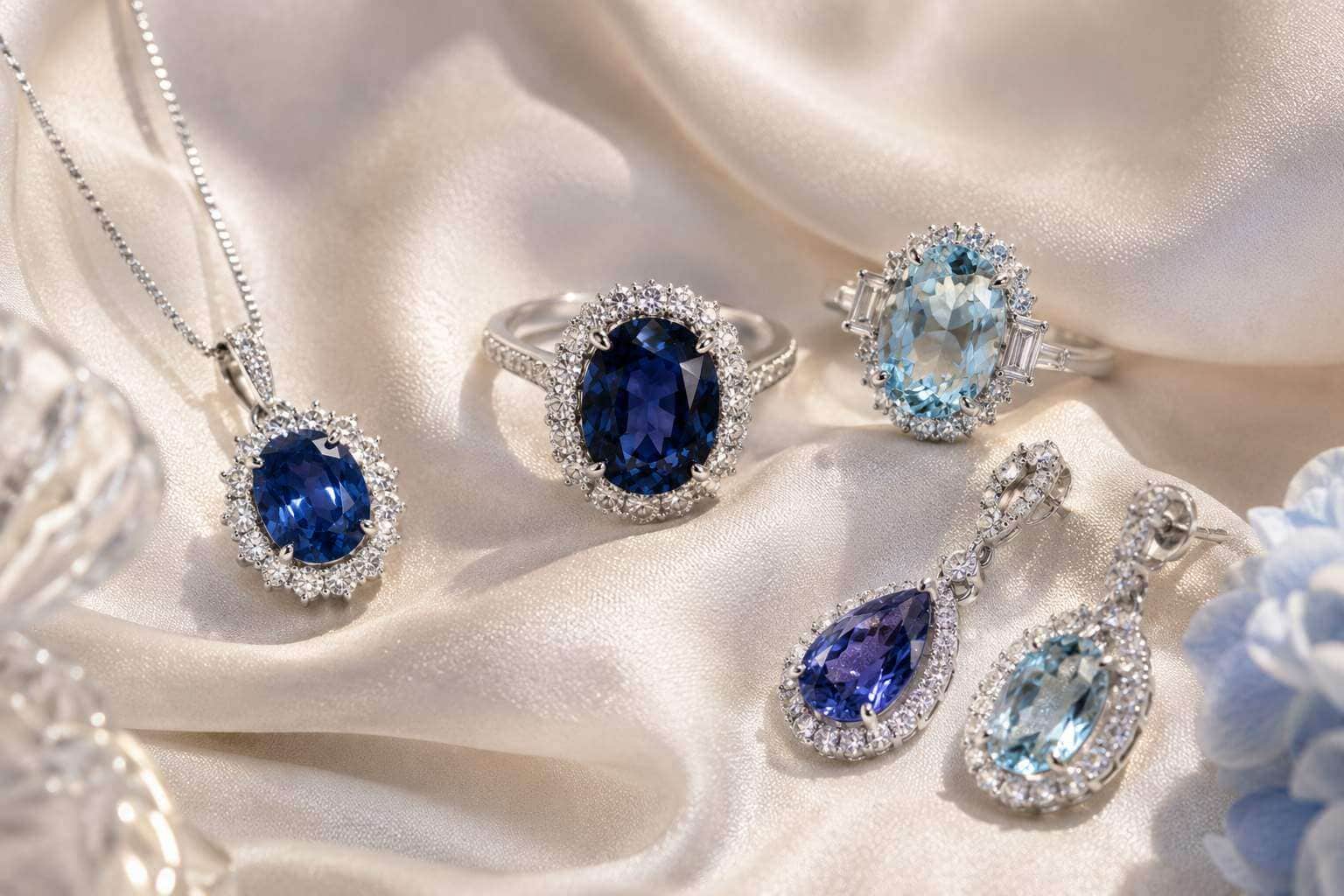
Then there is tanzanite, one of the more intriguing blue-purple voices in the jewellery box. Tanzanite rarely feels icy. It has dusk in it. The colour can shift towards violet, which gives it a more atmospheric quality than sapphire or aquamarine. With diamonds, tanzanite often feels less ceremonial and more enigmatic, especially when the cut allows the stone’s blue and violet tones to move in different lights.
For readers who enjoy less obvious blue stones, All Diamond’s Blue Tanzanite: The Beautiful Rare Gemstone is a useful supporting read.
Blue topaz gives another register. Sky blue topaz can feel bright, clean and almost playful. London blue topaz is moodier and more saturated. These are not always diamond-set statement pieces in the same way as sapphire or aquamarine, but they broaden the reader’s sense of what blue jewellery can mean.
Blue diamond jewellery sits in a different category again. Natural fancy blue diamonds are among jewellery’s rarest colour stories, while treated blue diamond designs offer another way to carry a blue-diamond mood when the treatment is described honestly. The important point is not to blur those worlds. One is collector rarity. The other is a colour-led design choice.
Blue is often the choice for someone who wants colour without losing polish. Does that sound like your style?
The Green Gemstone Mood: Lush Contrast, Vintage Warmth And Natural Drama
Green gemstones behave differently with diamonds. Blue can sit beside diamonds in a cool tonal harmony. Green usually creates stronger contrast.
That contrast is the source of its power. A green centre stone immediately becomes the focal point. Diamonds around it do not simply add sparkle. They sharpen the outline, brighten the edges and make the green feel more deliberate.
Emerald is the great romantic green. It carries history, character and a certain softness of light. Where a sapphire often looks clean and controlled, an emerald can feel more atmospheric. Even when the design is simple, the stone has depth and texture.
This is why emerald and yellow gold can be such an effective pairing. The gold warms the green. The diamonds lift it. The result can feel less icy than sapphire and more intimate than a white diamond solitaire.
All Diamond’s Emerald 0.50ct Diamond 0.06ct Three Stone Ring 9k Yellow Gold is a useful example. The oval emerald brings the colour, the two diamonds give the design its balance, and the yellow gold keeps the whole piece warm rather than stark.

Design Example
Emerald 0.50ct Diamond 0.06ct Three Stone Ring 9k Yellow Gold
The yellow gold warms the emerald while the diamonds give the design balance, light and a more intimate green contrast.
For readers drawn to that quieter richness, the existing All Diamond piece on Emeralds And Quiet Luxury deepens the green story without repeating this article.
Green sapphire is less familiar to many buyers, which makes it especially interesting. It sits between the classic expectations of sapphire and the organic pull of green. It does not have emerald’s historic softness, but it has a cleaner, more unusual modern character.
That makes green sapphire a good choice for someone who likes green but wants something a little less expected than emerald. It can feel contemporary in yellow gold, especially when paired with diamond shoulders or side stones. The colour is still natural and earthy, but the overall design can feel sharper and more current.
All Diamond’s Pear Green Sapphire and Diamond Engagement Ring 1.50ct 18k Yellow Gold shows this tension well. The pear-shaped green sapphire gives the ring direction and personality, while the diamond shoulders keep it within the refined diamond jewellery language.

A Less Obvious Green
Pear Green Sapphire and Diamond Engagement Ring 1.50ct 18k Yellow Gold
A less obvious green choice, with a directional pear shape and diamond shoulders that keep the colour refined rather than rustic.
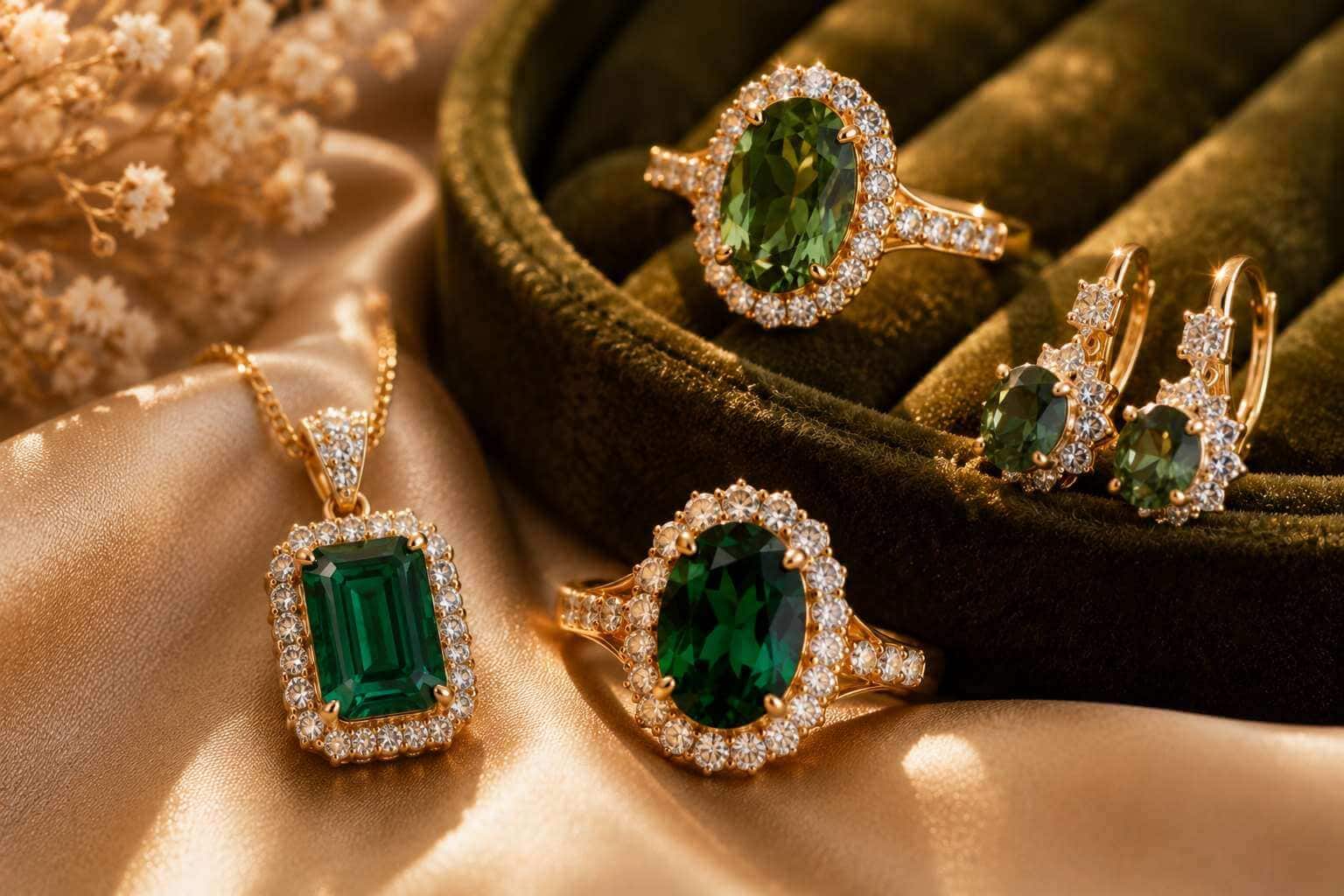
Readers may also hear about green tourmaline, tsavorite garnet and peridot in wider gemstone conversations. They are useful names to recognise, but the All Diamond green edit is strongest around emerald and green sapphire, which gives the article a cleaner and more commercially relevant focus.
Green asks for a little more confidence. Do you want your jewellery to blend elegantly, or become the detail people remember?
Metal Colour Changes The Whole Conversation
Metal is not a neutral frame. It changes how both blue and green gemstones behave.
White gold and platinum make blue stones feel crisp. They support sapphire’s formal elegance, aquamarine’s icy freshness and tanzanite’s twilight coolness. If the reader wants a sleek, composed, almost architectural jewel, white metal is usually the natural starting point.
Yellow gold gives blue stones more contrast. A deep blue sapphire in yellow gold can feel maritime, bold and slightly vintage. The gold warms the composition without softening the blue itself. It is a good choice for someone who wants colour to feel intentional rather than restrained.
With green gemstones, yellow gold often feels instinctive. It brings out the organic side of emerald and green sapphire, making the jewel feel warmer and more tactile. Green and yellow gold can feel botanical, antique-inspired or romantic, depending on the setting.
White gold does something different. It makes green sharper. Emerald in white metal can lean towards Art Deco elegance. Green sapphire in white metal can feel cleaner and more contemporary. This is the better direction when the wearer wants the green to look crisp rather than earthy.
Rose gold should be used more selectively. It can soften aquamarine and make some green stones feel romantic, but it may also complicate strong colour stories. When the gemstone is already doing a lot, the simplest metal choice is often the most elegant one.
Sparkle, Cut And The Way Colour Holds Light
Diamond buyers often think first about brilliance. With coloured gemstones, the question is not only how much the stone sparkles. It is how it holds colour.
Sapphire can take strong polishing and often gives a lively, saturated look. Aquamarine tends to be paler and more transparent, so the impression is more about freshness than drama. Tanzanite can be mesmerising because its colour shifts and deepens. Blue topaz can give bright, clean colour, particularly in lighter, more accessible jewellery designs.
Emerald is different. It is prized less for high-octane sparkle and more for depth, glow and character. Many emeralds are cut to show the colour elegantly rather than to maximise glitter. This is why emeralds can look so beautiful beside diamonds: the diamond brings the flash, the emerald brings the atmosphere.
Green sapphire sits closer to sapphire in structure and mood, but with a less expected colour identity. It can feel cleaner and more practical than emerald while still offering the green contrast that makes diamonds stand forward.
This is the important buying distinction. If the reader wants crisp brightness and a polished feel, blue usually wins. If they want depth, warmth and visual drama, green becomes more compelling.
Blue Or Green: Which Looks More Luxurious?
Luxury is not only a question of price. It is a question of visual authority.
Blue gemstones often look luxurious because they feel composed. Sapphire with diamonds has an established prestige. Aquamarine with diamonds feels elegant in a lighter, more effortless way. Tanzanite adds a more unusual, evening-like mood. Blue is particularly good for readers who want coloured gemstone jewellery that still feels neat, symmetrical and controlled.
Green gemstones often look luxurious because they feel rich. Emerald has an immediate sense of history. Green sapphire has the confidence of the unexpected. Green against diamond creates a stronger visual hierarchy, which can make even a relatively simple setting feel distinctive.
So the answer depends on the desired type of luxury.
- Choose blue for cool polish, regal restraint, oceanic clarity and refined sparkle.
- Choose green for richness, nature, vintage romance and a centre stone that feels emotionally warmer.
For a wider view of how gemstones work with diamonds beyond this blue-green comparison, All Diamond’s guide to The Art Of Diamond-Gemstone Pairings is the natural next step.
How To Choose Between Blue And Green Gemstone Jewellery
A useful way to choose is to imagine the jewellery in real light and real clothes.
Blue gemstones often suit navy, black, grey, white, ivory and cool tailoring. They work beautifully with silk shirts, winter coats, sharp eveningwear and crisp occasion dressing. Sapphire and diamond jewellery can look especially strong when the wearer favours classic structure.
Green gemstones often suit cream, camel, olive, chocolate, ivory, linen, black and gold-toned styling. Emerald and diamond jewellery can look beautiful against softer textures because the colour feels alive rather than icy. Green sapphire works well for someone who wants the freshness of green without the overt vintage mood of emerald.
Skin tone can influence the final impression, but it should not be treated as a rule. Personal style matters more. A cool-toned wearer may look wonderful in yellow gold and emerald if that is the mood she loves. A warm-toned wearer may look striking in platinum and sapphire if the contrast feels right.
The better question is: should the jewellery feel serene or lush?
If the answer is serene, choose blue.
If the answer is lush, choose green.
The simplest test is emotional rather than technical: when you picture the piece being worn, do you see cool light or living colour?
The Final Word: Diamonds Set The Stage, Colour Writes The Story
Diamonds are extraordinary because they transform the light around them. They frame, lift, sharpen and illuminate. But when a gemstone enters the design, the emotional centre changes.
Blue makes diamond jewellery feel composed, elegant and quietly powerful. Green makes it feel rich, natural and full of character. One is not more tasteful than the other. They simply belong to different visual languages.
A blue sapphire and diamond ring can feel like midnight polished into shape. An aquamarine and diamond earring can feel like morning light. An emerald and diamond ring can feel warm, storied and personal. A green sapphire and diamond ring can feel unusual, modern and quietly confident.
The most beautiful choice is the one that feels unmistakably yours.
Explore Colour With Natural Diamonds
If you are choosing between blue and green gemstones, begin with the mood you want the jewellery to carry. All Diamond’s coloured gemstone and diamond pieces bring together natural diamonds, carefully chosen gemstones and designs that let colour speak clearly.
Explore sapphire, aquamarine, emerald and green sapphire jewellery to find the piece whose colour, setting and metal feel most naturally aligned with your style.
Choose The Colour That Feels Like Yours
Browse diamond and gemstone rings, earrings and necklaces where natural diamonds bring light, structure and refinement to richly personal colour.
FAQ
Are blue or green gemstones better with diamonds?
Neither is automatically better. Blue gemstones tend to look cooler, crisper and more composed with diamonds. Green gemstones tend to look warmer, richer and more organic. The best choice depends on the mood and style you prefer.
Which blue gemstones does All Diamond offer?
The All Diamond catalogue includes blue sapphire, aquamarine, tanzanite, sky blue topaz, London blue topaz, blue topaz and blue diamond jewellery. Sapphire is the classic deep-blue choice, while aquamarine, tanzanite and topaz offer softer or more unusual blue moods.
Which green gemstones does All Diamond offer?
The main green gemstone choices in the All Diamond catalogue are emerald and green sapphire. Emerald gives a rich, historic and romantic green look, while green sapphire feels more unexpected and contemporary.
Do blue gemstones look better in white gold or yellow gold?
Blue gemstones often look especially crisp in white gold or platinum. Yellow gold creates stronger contrast and can make blue stones feel warmer, bolder and more vintage-inspired.
Do green gemstones look better in yellow gold or white gold?
Yellow gold usually enhances the warmth and organic character of green gemstones. White gold or platinum can make green stones look sharper, cooler and more Art Deco in feeling.
Is emerald or green sapphire better for everyday jewellery?
Emerald is loved for its colour, history and character, but it often asks for more care. Green sapphire gives a green gemstone look with a cleaner, more modern feel and is often an appealing option for readers who want something less expected.