
An heirloom begins as somebody's new jewellery.
Before it is wrapped carefully in tissue, remembered in a will or taken from a box with the words “this belonged to your grandmother”, it belongs to one person. She wears it to dinner. She catches it on the cuff of a coat. She takes it off before bed. It appears in photographs nobody yet thinks of as family history.
That matters, because the best way to create heirloom jewellery is not to choose something that looks old, solemn or expensive enough to deserve preservation.
It is to choose something worth living with now and capable of surviving long enough to gather a story.
Price can help. Precious materials can help. Craftsmanship certainly helps. But none of them, on their own, can turn jewellery into an heirloom.
Time does that.
Your job is to give time something good to work with.
Table Of Contents
- An Heirloom Needs A First Life
- Choose Materials For The Life They Will Actually Live
- Timeless Does Not Mean Plain
- Meaning Works Best When It Belongs To You
- Think About Repair Before You Think About Forever
- Rings Need A Little More Foresight
- Some Jewellery Is Easier To Pass On Than Others
- Coloured Gemstones Can Carry Family Identity
- Hallmarks Become Part Of The Story
- Keep The Paperwork With The Jewellery
- Maintenance Is Part Of The Inheritance
- Jewellery Designed To Be Worn Repeatedly Has An Advantage
- Do Not Design For An Imaginary Descendant
- An Heirloom Is Not An Investment Thesis
- Give The Future Something Worth Keeping
- Find A Piece Worth Beginning With
- Frequently Asked Questions
An Heirloom Needs A First Life
It is tempting to think about heirloom jewellery backwards.
We imagine a future daughter, grandson or niece opening a box decades from now. That can make the purchase feel terribly important, as though every design decision needs to satisfy people who have not even met the piece yet.
I would resist that.
Choose jewellery for the person who will own it first.
A future heirloom that spends its first thirty years unworn because it was considered too precious, too formal or simply not quite right has missed an important part of the assignment.
Wear creates memory.
The ring that appears in anniversary photographs acquires context. The pendant that travels with you becomes associated with places. The bracelet worn to family weddings eventually carries more than diamonds and gold.
This is where heirloom thinking overlaps with the idea behind a good capsule jewellery collection. The strongest pieces tend to be the ones that fit naturally into real life rather than waiting indefinitely for an occasion.
An heirloom does not need to begin with ceremony.
It needs to begin with affection.
Choose Materials For The Life They Will Actually Live
Longevity does matter, of course.
If you hope jewellery will survive several generations, the materials need to suit the way the piece will be worn.
Diamond is exceptionally resistant to scratching, but hardness is only one part of gemstone durability. GIA distinguishes hardness, toughness and stability, and notes that even diamond can chip or break when struck in the wrong place. A loose diamond can also eventually wear against its own metal setting.
That is a useful correction to the idea that “diamond is forever” means “diamond is indestructible”.
Nothing worn on a human body is beyond maintenance.
Ruby and sapphire are also excellent candidates for jewellery intended for frequent wear. Both are corundum, rank 9 on the Mohs scale and have excellent toughness with no cleavage, making sapphire particularly suitable for rings and other jewellery exposed to everyday use.
Emerald needs a little more thought. It is still entirely capable of lasting for generations, but emerald generally requires more care because fractures are common and treatments may be sensitive to heat or chemicals.
That does not make emerald a bad heirloom stone.
It makes it a different heirloom stone.
A future heirloom should not be chosen from a hardness chart alone. It should be chosen with an understanding of the life you expect it to lead.
Timeless Does Not Mean Plain
The word “timeless” is used so often in jewellery that it can begin to mean almost nothing.
A round solitaire is timeless.
An Art Deco inspired ring may be timeless.
A sapphire surrounded by diamonds can feel timeless.
So can a highly distinctive piece that could never be mistaken for anything else.
What matters is not whether the design belongs to no era. Almost every piece of jewellery reveals something about when it was created.
The more useful test is whether the design has enough coherence to remain interesting after its fashionable moment has passed.
That is one reason vintage-inspired modern jewellery can be useful when thinking about future heirlooms. Good modern designs can borrow symmetry, geometry, milgrain, bezel settings or other historic visual ideas without becoming copies of old jewellery.
The result has a relationship with the past without pretending to have a past it has not yet earned.
Your future heirloom is allowed to look as though it was made in 2026.
One day, that will be part of its charm.
Meaning Works Best When It Belongs To You
Jewellery can carry symbolism from the beginning, but the strongest meaning is usually personal rather than prescribed.
A three-stone ring is a good example. Three-stone designs are commonly associated with the past, present and future.
But the three stones do not have to mean that.
They could represent three children. Three important places. A marriage and two entirely unrelated moments. Or nothing that can be neatly explained at all.
Meaning becomes more durable when the owner is allowed to define it.
That is preferable to buying jewellery because somebody has declared that a particular symbol is automatically “heirloom worthy”.
A Design That Can Gather Its Own Meaning
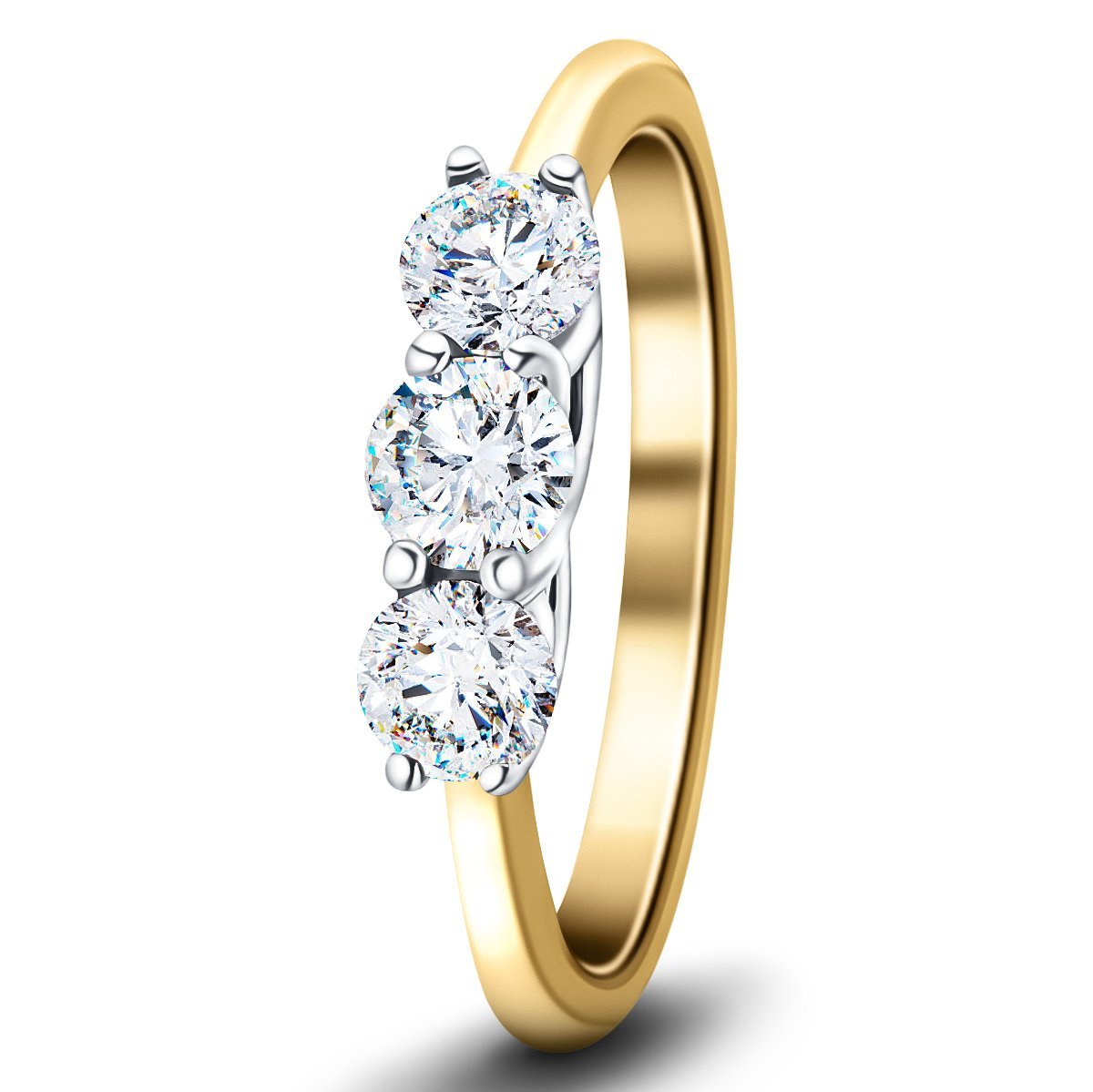
Three Stone Diamond Ring 1.00ct G/SI Quality In 18k Yellow Gold
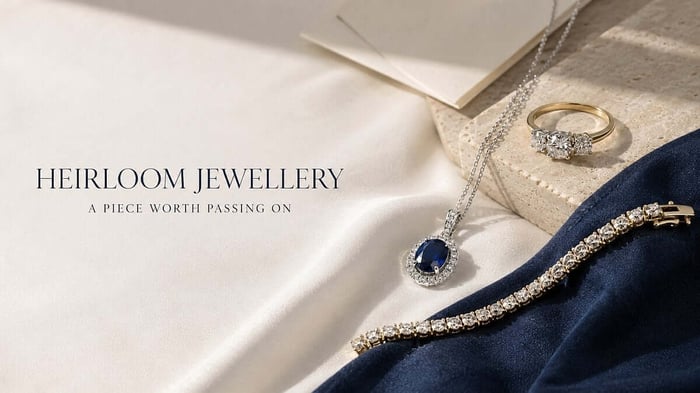
A three-stone natural diamond ring gives the wearer a recognisable framework without dictating the story. The design leaves room for its meaning to deepen as the piece is worn and becomes associated with particular people, places and moments.
Think About Repair Before You Think About Forever
If a piece is intended to survive, somebody will eventually need to repair it.
That is not a failure.
Prongs wear. Clasps loosen. Chains stretch. Rhodium finishes may need renewing. Stones should be checked. Hinges and links can develop wear after years of movement.
GIA recommends examining jewellery for loose stones before aggressive cleaning methods such as steam or ultrasonic cleaning, because these processes can loosen gemstones that are already vulnerable in their settings.
The practical implication is simple.
An heirloom is not an object preserved in its original factory condition forever.
It is an object capable of being cared for.
When choosing a future heirloom, look at the construction as well as the front view. Ask whether the setting makes sense. Look at the thickness of the band, the security of clasps and the points where different parts join.
A beautifully made piece that can be inspected, cleaned, repaired and, where appropriate, reset has a much better chance of reaching another generation than something selected purely because it looked impressive in one photograph.
Rings Need A Little More Foresight
Rings carry enormous emotional power, but they also come with one practical complication.
Finger sizes change.
They change across a lifetime and, obviously, between people.
Many ring designs can be resized, but not all can be altered equally easily. Full eternity rings, intricate settings and designs with stones or decorative work continuing around the complete circumference may present greater resizing constraints than simpler bands.
Our existing guide to ring resizing explores those practical questions in detail.
If passing a ring down is genuinely part of the plan, adaptability is worth considering.
That does not mean choosing the plainest possible ring. It means understanding how the design is constructed before assuming that a future owner can simply take it to a jeweller and have the size changed without consequences.
The same principle applies to engraving.
An inscription can add wonderful provenance, but think about where it sits and whether future resizing could affect it.
A date, initials or a few private words can become one of the most touching parts of an heirloom.
Leave enough room for the jewellery itself to continue its journey.
Choose A Piece That Can Start A Story
If a three-stone ring appeals because it gives meaning somewhere to settle, explore diamond and gemstone trilogy designs with an eye on the piece you would genuinely enjoy wearing now.
Explore Three Stone RingsSome Jewellery Is Easier To Pass On Than Others
Rings are emotionally powerful, but necklaces, earrings, and bracelets have an underrated advantage as heirlooms.
They are less dependent on exact body sizing.
A pendant can move from one generation to another without a jeweller having to alter the central piece. Chains can be changed if necessary. Earrings do not need to fit a particular finger. A bracelet may need adjustment, but often the core design can remain intact.
This does not make non-ring jewellery inherently better as an heirloom.
It simply makes handover easier.
There is something appealing about a pendant in particular. It can sit close to the wearer for decades and then be worn by somebody else in almost exactly the same form.
The chain may change.
The person certainly will.
The central piece can remain recognisable.
Coloured Gemstones Can Carry Family Identity
Not every heirloom needs to centre on a colourless diamond.
Colour can be one of the easiest ways for jewellery to become recognisable across generations.
Think of how quickly a family can identify “Grandmother's sapphire ring” or “Mum's ruby necklace”. Colour gives the piece a shorthand.
Sapphire is especially useful in this context because its beauty comes with excellent practical durability. Corundum is stable under normal wearing conditions, highly scratch resistant and tough enough for jewellery exposed to regular wear.
A gemstone can also carry meaning that has nothing to do with gemological tradition.
It may match someone's eyes.
It may be a birthstone.
It may simply be the colour she always wore.
That personal association is often far more important than a generic symbolism list.

Colour Makes An Heirloom Recognisable
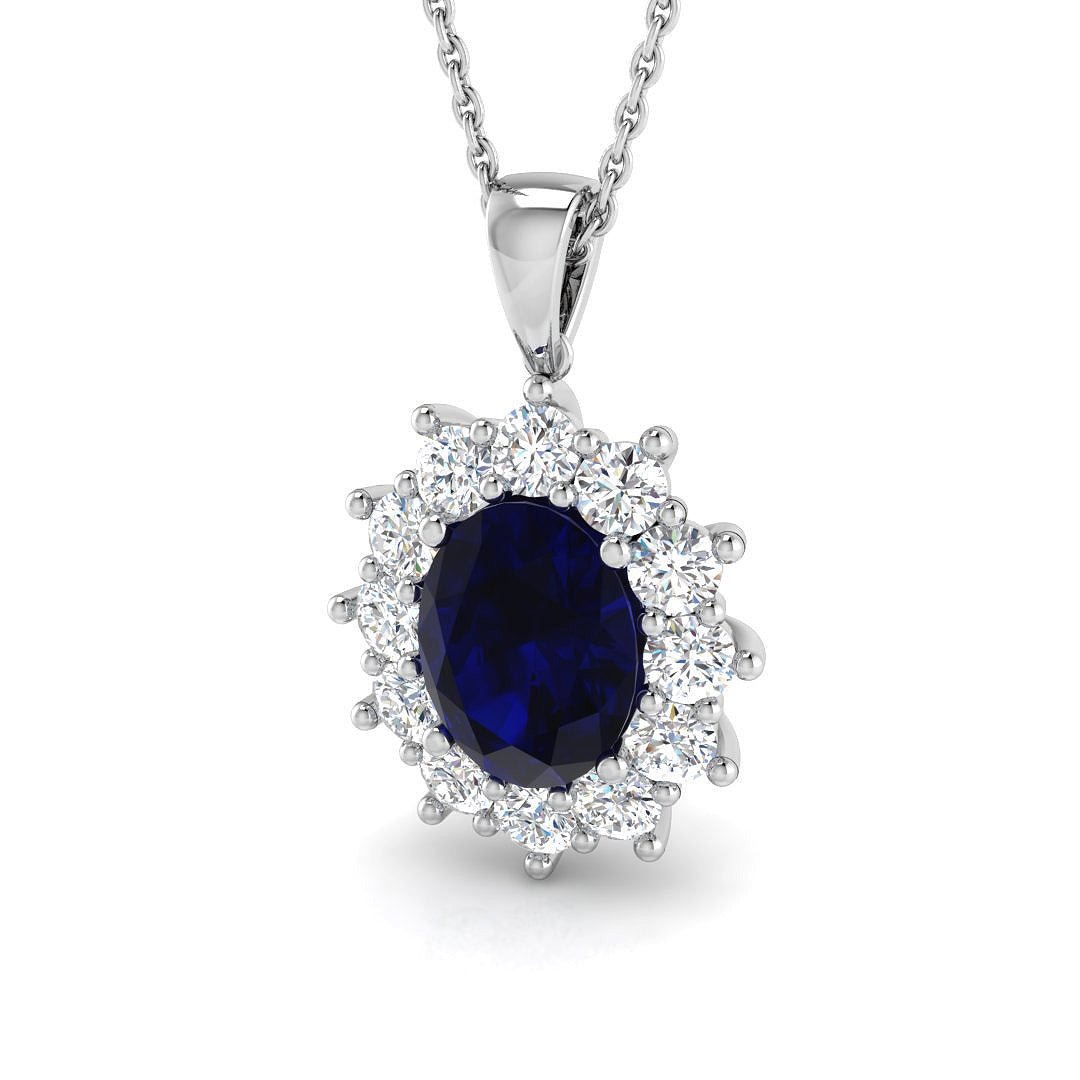
Blue Sapphire 2.40ct Oval With Diamond Cluster Pendant Necklace In 18k White Gold
A deep blue sapphire surrounded by natural diamonds has an immediate visual identity. Because it is a pendant rather than a ring, the central jewellery piece can also pass between wearers without needing to accommodate a different finger size.
Hallmarks Become Part Of The Story
A hallmark begins as consumer protection.
Decades later, it can become provenance.
UK hallmarking exists to verify that qualifying precious-metal articles match the description and legal fineness claimed for them.
The standard UK hallmark includes compulsory information such as the sponsor's mark, fineness mark and assay office mark. A date letter may also be present and can help future owners understand when a piece entered the family.
That is particularly interesting when deliberately creating a future heirloom.
The hallmark is not decoration added for sentiment. It is independently useful information embedded in the piece itself.
What seems administrative now may become fascinating later.
Keep The Paperwork With The Jewellery
Jewellery tends to outlive paperwork because paperwork is much easier to lose.
Try not to let that happen.
Keep the original invoice. Keep any diamond or gemstone grading report supplied with the piece. Keep an insurance valuation. Keep details of significant repairs, replacement stones or alterations.
If the jewellery contains a treated coloured gemstone and treatment information has been supplied, preserve that too. Care requirements can vary according to treatment, particularly for gemstones such as emerald.
Photograph the piece when it is new.
Then consider adding something no laboratory can provide.
Write down why you chose it.
It does not need to become a grand family manifesto. A short note is enough.
Who bought it?
For whom?
When?
Why this design?
Was it connected to a particular birthday, anniversary, success, journey or change in life?
That information may seem obvious while everybody involved is alive.
It becomes surprisingly precious when they are not.
Maintenance Is Part Of The Inheritance
We tend to romanticise heirlooms as objects that somehow survive untouched.
Real heirlooms survive because somebody looks after them.
Have settings inspected when appropriate.
Do not wait for a stone to fall out before noticing that a claw has worn.
Clean the piece in a way suitable for its gemstones and treatments.
Store jewellery so that harder stones cannot scratch softer ones or precious-metal surfaces.
Keep records when meaningful repairs are made.
The scratches and small signs of wear that remain are not necessarily defects in the story. They are evidence that the jewellery had a life.
The important distinction is between patina and neglect.
Jewellery Designed To Be Worn Repeatedly Has An Advantage
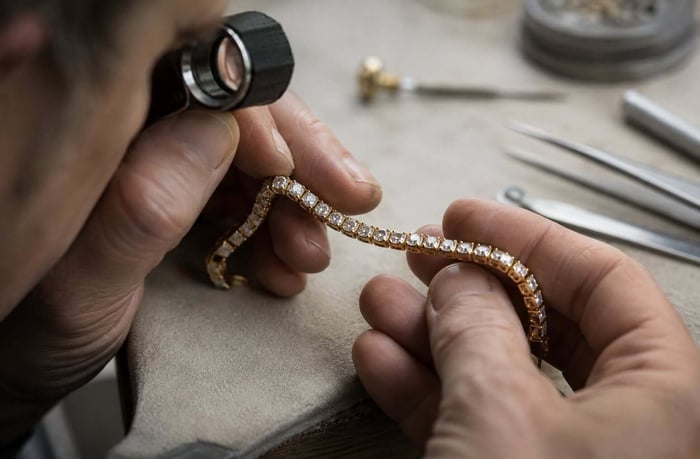
A classic diamond tennis bracelet demonstrates another route to heirloom jewellery.
There is no single centre stone carrying the entire identity. Instead, the piece depends on repeated diamonds, flexible construction and a form that has already proved remarkably adaptable across decades of fashion.
It is the kind of jewellery that can appear at formal events and with far less formal clothes.
That matters because frequency of wear creates familiarity.
Eventually, people may remember the bracelet because they remember the person wearing it.
A Piece That Becomes Familiar Through Wear
Classic Diamond Tennis Bracelet 1.50ct G/SI In 18k Yellow Gold
A classic tennis bracelet offers another kind of continuity. Its identity comes from the whole object rather than a single centre stone, while its flexible form can remain relevant through many changes in personal style.

Do Not Design For An Imaginary Descendant
There is one final trap in deliberate heirloom buying.
Trying too hard.
You may picture a future granddaughter with exactly your taste.
She may dislike yellow gold.
She may love it.
She may reset the diamonds.
She may wear the piece exactly as you did.
She may be a grandson.
She may decide the most meaningful thing she can do is pass it to somebody else.
You cannot control that, and you probably should not try.
An heirloom is a gift to the future, not an instruction.
Choose good materials. Choose construction that can be maintained. Preserve useful information. Add meaning where it is genuinely yours.
Then allow future owners to have a relationship with the jewellery rather than merely acting as custodians of your intentions.
Sometimes resetting an inherited stone is not destruction of an heirloom.
It is the next chapter.
Our article on navigating inherited jewellery looks at the question from that future owner's perspective.
An Heirloom Is Not An Investment Thesis
Jewellery can have considerable material value.
That does not mean the best reason to create a family heirloom is an expectation that its market price will rise.
Future values depend on diamonds, gemstones, precious metals, condition, craftsmanship, desirability and the market at the time. An insurance valuation is useful for insurance. It is not a promise of future resale proceeds.
The value that makes a piece impossible to replace may be the part no valuer can measure.
The photographs.
The remembered gesture.
The person who always wore it.
The sentence somebody once said about it.
That is why the most expensive object in a jewellery box is not necessarily the piece a family would save first.
Give The Future Something Worth Keeping
You cannot declare an heirloom into existence.
You can only create the conditions.
Choose jewellery you genuinely want to wear.
Choose materials appropriate to the life it will lead.
Pay attention to construction and future maintenance.
Keep the hallmark, paperwork and story together.
Then stop worrying quite so much about the next generation.
Wear it.
Let it appear in photographs.
Let it acquire tiny signs of a life well lived.
Let somebody associate it with you.
One day, perhaps much later than you can imagine, another person may open a box and recognise it immediately.
That is when new jewellery finally becomes an heirloom.
Find A Piece Worth Beginning With
The best future heirloom is not necessarily the most elaborate piece in the collection. It is the one with enough quality to endure, enough character to be remembered, and enough relevance to be worn from the beginning.
Explore All Diamond JewelleryFrequently Asked Questions
What Makes Jewellery Heirloom Quality?
There is no official heirloom grade. A good future heirloom combines durable and appropriate materials, sound construction, a design worth continuing to wear, the ability to be maintained or repaired and enough personal meaning for somebody to care about preserving it.
Which Gemstones Are Best For Heirloom Jewellery?
Diamonds, rubies and sapphires are particularly durable choices for frequently worn jewellery. Other gemstones can also last for generations, but their care requirements may differ. Emerald, for example, can make beautiful heirloom jewellery but generally needs more thoughtful handling than ruby or sapphire.
Is 9k Or 18k Gold Better For An Heirloom?
Both can produce jewellery capable of lasting for generations when the piece is well made and properly maintained. 18k gold contains a higher proportion of gold, while practical wear characteristics also depend on the alloy and construction of the piece.
Should Heirloom Jewellery Be Insured?
Valuable jewellery is worth considering for appropriate insurance, particularly when replacement would be financially difficult. Keep valuations, photographs, receipts and any grading reports together, and review insurance arrangements as circumstances and values change.
Can An Heirloom Ring Be Resized For A Future Owner?
Many rings can be resized, but the degree of alteration depends on the design. Full eternity rings and pieces with gemstones or detailed work around the complete band can be more difficult to alter than simpler designs.
Should I Engrave Jewellery I Want To Pass Down?
An engraving can add meaningful provenance, particularly names, initials, dates or a short personal message. Consider where the engraving will sit and whether future resizing or repair might affect it.